Tag Archives: how to time travel

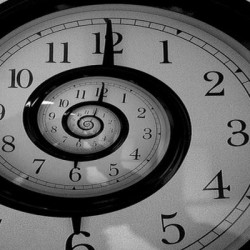
A black and white image of a clock face with a spiral effect distorting the numbers and hands.

Explore Two Famous Time Travel Paradoxes – The Grandfather Paradox & Twin Paradox

Time Travel Paradoxes – The Grandfather Paradox & Twin Paradox

What is a time travel paradox? It is an occurrence that apparently violates some aspect of causality (i.e., cause precedes effect) typically associated with time travel. Although there are numerous time travel paradoxes, let us explore two famous ones: The grandfather paradox and the twin paradox.

  • The grandfather paradox—Science fiction writer René Barjavel, in his 1943 book, Le Voyageur Imprudent (Future Times Three), originally proposed the grandfather paradox. It goes something like this. A person goes back in time and meets his grandfather before his grandfather meets his grandmother. The person in some way interferes with his grandfather meeting his grandmother. Consequently, the grandfather and grandmother never meet. The question becomes, what happens to the person? In theory, the person will never be born.  Is this just some illogical premise, similar to asserting that a square circle exists? Most of the scientific community considers it a valid concern regarding causality violations due to time travel. Some physicists believe that it actually presents a barrier to time travel. However, numerous theories exist to resolve time travel paradoxes. We will discuss those theories in the next section, but first let us explore another famous paradox.
  • The twin paradox—The is one of the most famous time travel paradoxes. It goes something like this: On Earth live a pair of twins. They are almost the same age, differing only by the order in which they were born. One twin boards a spacecraft capable of traveling near the speed of light. In the spacecraft, the twin embarks on a one-year journey, measured by the clock within the spacecraft. During the one-year journey, the spacecraft travels at 99.94% the speed of light. When the spacecraft returns to Earth, the twin on the spacecraft has aged one year, but learns his twin has aged almost thirty years. Although the example is fictitious, the science is real. The twin paradox has been experimentally verified using highly accurate atomic clocks, one on a jet plane and the other at the airport. There have been many variations of the twin paradox. The scientific community considers it a valid effect of Einstein’s special theory of relativity regarding time dilation.

There is a laundry list of time travel paradoxes. I discuss many of them in my critically acclaimed best selling new book, How to Time Travel. The paradoxes above are sufficient to illustrate causality issues. It is important to note that the time travel paradoxes are not simply in the category of thought experiments. Numerous time travel paradoxes, like the twin paradox and the double-slit delayed-choice paradox (discussed in a previous post), are experimental facts. They are real. The important question is: Do time travel paradoxes form a barrier to time travel? We will address this question in an up coming post.

 

Multiple overlapping clock faces with various times, creating a surreal and abstract time concept in blue tones.

What Is the Science of Time Travel?

The science of time travel is real. There is experimental evidence that proves time travel is real. Yet, with but a few exceptions, most of my colleagues in the scientific community avoid discussing or doing serious time travel research. Why is this?

The theory regarding time travel is relatively easy to understand on a technical basis if you have or are pursuing a degree in the physical sciences, or on a conceptual basis, for the layperson. For example, professors teach time dilation (i.e., forward time travel) in undergraduate physics classes. Professors also teach general relativity in both undergraduate and graduate physics classes. The general theory of relativity embodies, along with Einstein’s theory of gravity, the science of time travel to the past. Both the special and general theories of relativity are easy to grasp for a person with the proper scientific background. However, designing and engineering experiments to demonstrate time travel is an extremely difficult task. In fact, building particle accelerators capable of demonstrating even the simplest form of time travel, time dilation, requires the participation of numerous institutions, numerous nations, and a huge financial investment. An example of this is the Large Hadron Collider (LHC), which is the world’s largest high-energy particle accelerator. The European Organization for Nuclear Research (CERN), a collaboration of ten thousand scientists and engineers from over one hundred countries, built the LHC over a ten-year period, 1998 to 2008, at an estimated cost of $9 billion. Scientists hail it as one of the greatest scientific achievements. It is able to perform time dilation experiments, among many other important scientific tasks. However, even with highly sophisticated scientific instruments, research regarding particle acceleration and detection is a difficult endeavor. For example, in 2011, scientists using the Oscillation Project with Emulsion-tRacking Apparatus (OPERA) reported accelerating neutrinos faster than the speed of light, which later proved incorrect and due to faulty cable connections.  The main point is that the apparatus proposed to perform time travel research, even using subatomic particles, is extraordinarily expensive, difficult to build, and difficult to use. The energy required, even when dealing with subatomic particles, is enormous.

In summary, here are the salient elements of the science of time travel:

  • Einstein’s special theory of relativity provides a strong theoretical foundation for forward time travel, which is termed “time dilation.”
  • There is a wealth of scientific data proving time dilation is real and can occur when a frame of reference accelerates near the speed of light, or when a frame of reference is in a strong gravitational field.
  • Even though there is general agreement regarding time dilation, no one has built a machine that enables a human to experience significant time dilation. It is true, however, that people traveling at high speeds, like astronauts, experience some time dilation. To date, the amount of time dilation experienced by any humans is only a small fraction of a second, and not noticeable to the humans involved.
  • Particle accelerators, such as the Large Hadron Collider, are able to accelerate subatomic particles near the speed of light, and time dilation is a measurable effect.
  • Einstein’s general theory of relativity predicts gravitational time dilation. The scientific community generally agrees time dilation occurs in strong gravitational fields.
  • Some solutions to Einstein’s equation of general relativity result in closed timelike curves, which theoretically suggest backward time travel.
  • The scientific community is not in agreement regarding the practicality and reality of backward time travel. In fact, the entire subject of backward time travel is contentious.

The above material is based on my critically acclaimed new book, How to Time Travel, available at Amazon.com.


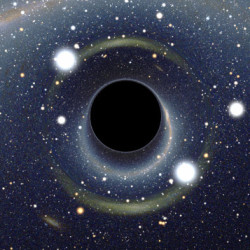
A black hole in space surrounded by stars and a glowing gravitational lensing effect.

Using a Black Hole to Time Travel!

Using a black hole to time travel!

What is a black hole? A black hole is a point in space where gravity pulls so much that not even light can escape. We cannot see black holes, but we can infer their existence by how they influence stars around them.

There are numerous types of black holes. Some are small, about the size of an atom. Yet, they can have a mass equal to a mountain. Some are supermassive, like the black hole theorized to exist at the center of our galaxy, a mere twenty-six thousand light-years from us. It is the single heaviest object in our galaxy. In between the atom-size black holes and the supermassive black holes are the “stellar” black holes. They are roughly up to twenty times the mass of our sun.

You may wonder: How do black holes form? Physicists think that the atom-size black holes formed during the early stages of the big bang, and that the supermassive black holes formed when the galaxies formed. Physicists also think the stellar black holes form when a star dies and collapses on itself.

What makes a black hole interesting from the standpoint of time travel is that the gravitational attraction is so great that time dilation due to gravity (as predicted by Einstein’s general theory of relativity) would be enormous. In fact, a supermassive black hole, like the one at the center of our galaxy, would slow down time far more than anything else in the galaxy would. This makes a black hole a natural type of time machine.

You may worry that a black hole may swallow the Earth. However, I have good news for you. Black holes do not move around, and there are none close to the Earth. In short, we do not have to worry about being swallowed by a black hole.

Is there any practical way to use a black hole as a time machine? The answer is no, not via today’s science. The scientists at CERN using the Large Hadron Collider are attempting to make small black holes. Perhaps, in time, they will succeed, and we will be able to use its properties as a time machine. This, however, is speculation.

This material is from my new book, How to time Travel (2013).

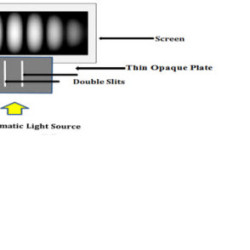
Diagram of a double-slit experiment setup with light source, thin opaque plate, double slits, and screen.

A Classic Time Travel Paradox – Double-Slit Experiment Demonstrates Reverse Causality!

Almost the entire scientific community has held for hundreds of years that for every effect, there must have been a cause. Another way of saying this is cause precedes effect. For example, if you hit a nail with a hammer (the cause), you can drive it deeper into the wood (the effect). However, some recent experiments are challenging that belief. We are discovering that what you do after an experiment can influence what occurred at the beginning of the experiment. This would be the equivalent of the nail going deeper into the wood prior to it being hit by the hammer. This is termed reversed causality. Although, there are numerous new experiments that illustrate reverse causality, science has been struggling with a classical experiment called the “double-slit” that illustrates reverse causality for well over half a century.

There are numerous versions of the double-slit experiment. In its classic version, a coherent light source, for example a laser, illuminates a thin plate containing two open parallel slits. The light passing through the slits causes a series of light and dark bands on a screen behind the thin plate. The brightest bands are at the center, and the bands become dimmer the farther they are from the center. See image below to visually understand this.

The series of light and dark bands on the screen would not occur if light were only a particle. If light consisted of only particles, we would expect to see only two slits of light on the screen, and the two slits of light would replicate the slits in the thin plate. Instead, we see a series of light and dark patterns, with the brightest band of light in the center, and tapering to the dimmest bands of light at either side of the center. This is an interference pattern and suggests that light exhibits the properties of a wave. We know from other experiments—for example, the photoelectric effect (see glossary), which I discussed in my first book, Unraveling the Universe’s Mysteries—that light also exhibits the properties of a particle. Thus, light exhibits both particle- and wavelike properties. This is termed the dual nature of light. This portion of the double-slit experiment simply exhibits the wave nature of light. Perhaps a number of readers have seen this experiment firsthand in a high school science class.

The above double-slit experiment demonstrates only one element of the paradoxical nature of light, the wave properties. The next part of the double-slit experiment continues to puzzle scientists. There are five aspects to the next part.

  1. Both individual photons of light and individual atoms have been projected at the slits one at a time. This means that one photon or one atom is projected, like a bullet from a gun, toward the slits. Surely, our judgment would suggest that we would only get two slits of light or atoms at the screen behind the slits. However, we still get an interference pattern, a series of light and dark lines, similar to the interference pattern described above. Two inferences are possible:
    1. The individual photon light acted as a wave and went through both slits, interfering with itself to cause an interference pattern.
    2. Atoms also exhibit a wave-particle duality, similar to light, and act similarly to the behavior of an individual photon light described (in part a) above.
  2. Scientists have placed detectors in close proximity to the screen to observe what is happening, and they find something even stranger occurs. The interference pattern disappears, and only two slits of light or atoms appear on the screen. What causes this? Quantum physicists argue that as soon as we attempt to observe the wavefunction of the photon or atom, it collapses. Please note, in quantum mechanics, the wavefunction describes the propagation of the wave associated with any particle or group of particles. When the wavefunction collapses, the photon acts only as a particle.
  3. If the detector (in number 2 immediately above) stays in place but is turned off (i.e., no observation or recording of data occurs), the interference pattern returns and is observed on the screen. We have no way of explaining how the photons or atoms know the detector is off, but somehow they know. This is part of the puzzling aspect of the double-slit experiment. This also appears to support the arguments of quantum physicists, namely, that observing the wavefunction will cause it to collapse.
  4. The quantum eraser experiment—Quantum physicists argue the double-slit experiment demonstrates another unusual property of quantum mechanics, namely, an effect termed the quantum eraser experiment. Essentially, it has two parts:
    1. Detectors record the path of a photon regarding which slit it goes through. As described above, the act of measuring “which path” destroys the interference pattern.
    2. If the “which path” information is erased, the interference pattern returns. It does not matter in which order the “which path” information is erased. It can be erased before or after the detection of the photons.

This appears to support the wavefunction collapse theory, namely, observing the photon causes its wavefunction to collapse and assume a single value.

If the detector replaces the screen and only views the atoms or photons after they have passed through the slits, once again, the interference pattern vanishes and we get only two slits of light or atoms. How can we explain this? In 1978, American theoretical physicist John Wheeler (1911–2008) proposed that observing the photon or atom after it passes through the slit would ultimately determine if the photon or atom acts like a wave or particle. If you attempt to observe the photon or atom, or in any way collect data regarding either one’s behavior, the interference pattern vanishes, and you only get two slits of photons or atoms. In 1984, Carroll Alley, Oleg Jakubowicz, and William Wickes proved this experimentally at the University of Maryland. This is the “delayed-choice experiment.” Somehow, in measuring the future state of the photon, the results were able to influence their behavior at the slits. In effect, we are twisting the arrow of time, causing the future to influence the past. Numerous additional experiments confirm this result.

Let us pause here and be perfectly clear. Measuring the future state of the photon after it has gone through the slits causes the interference pattern to vanish. Somehow, a measurement in the future is able to reach back into the past and cause the photons to behave differently. In this case, the measurement of the photon causes its wave nature to vanish (i.e., collapse) even after it has gone through the slit. The photon now acts like a particle, not a wave. This paradox is clear evidence that a future action can reach back and change the past.

To date, no quantum mechanical or other explanation has gained widespread acceptance in the scientific community. We are dealing with a time travel paradox that illustrates reverse causality (i.e., effect precedes cause), where the effect of measuring a photon affects its past behavior. This simple high-school-level experiment continues to baffle modern science. Although quantum physicists explain it as wavefunction collapse, the explanation tends not to satisfy many in the scientific community. Irrefutably, the delayed-choice experiments suggest the arrow of time is reversible and the future can influence the past.

This post is based on material from my new book, How to Time Travel, available at Amazon in both paperback and Kindle editions.

Image: Figure 3, from How to Time Travel (2013)

A black and white image of a clock face with a spiral effect distorting the numbers and hands.

The Mallett Time Machine – Time Travel to the Past May Become Possible!

Thanks to particle accelerators, like the Large Hadron Collider (LCH) 175 meters (574 ft) beneath the Franco-Swiss border near Geneva, Switzerland, physicist have been able to routinely demonstrate forward time travel (i.e., time dilation) using subatomic particles. In a sense, you can think of the Large Hadron Collider as a time machine. It is capable of sending subatomic particles to the future. Unfortunately, we do not have a similar machine that can send subatomic particles to the past. However, Dr. Ronald Mallett is attempting to change that.

Dr. Ronald Mallett is an American theoretical physicist and the author of Time Traveler: A Scientist’s Personal Mission to Make Time Travel a Reality (2007). Dr. Mallett is a full professor at the University of Connecticut, where he has taught physics since 1975.

Dr. Mallett is attempting to twist spacetime using a ring laser (i.e., a laser that rotates in a circle) by passing it through a through a photonic crystal (i.e., a crystal that only allows photons of a specific wavelength to pass through it). The concept behind spacetime twisting by light (STL) is that by twisting space via the laser, closed timelike curves will result (i.e., time will also be twisted). In this way, Dr. Mallett hopes to observe a violation of causality when a neutron is passed through the twisted spacetime. Dr. Mallett also believes he will be able to send communication by sending subatomic particles that have spin up and spin down. Note, the spin of a subatomic particle is part of the particle’s quantum description. As a simple example, we can consider spin up equal to 1 and spin down equal to 0. Using this technique, Dr. Mallett can send a binary code, similar to the binary codes used in computing.

Few scientists openly discuss their work on time machines. They fear ridicule. In this regard, Dr. Mallett is a pioneer. When Dr. Mallett was ten years old, his father died at age thirty-three from a heart attack. Dr. Mallett has shared that his initial drive to invent a time machine was to go back in time and visit with his father. Unfortunately, the science of time travel only allows a person to go back in time to the point when the time machine is first turned on. Dr. Mallett acknowledges this, but continues his quest.

Dr. Mallett’s concept of twisting space is close to the concept of creating a wormhole, as discussed in my last post. Dr. Mallett is using laser light as means of creating the mouth of the wormhole. In a publication (R. L. Mallett, “The Gravitational Field of a Circulating Light Beam,” Foundations of Physics 33, 1307–2003), Dr. Mallett argued that with sufficient energies, the circulating light beam might produce closed timelike lines (i.e., time travel to the past).

Is Dr. Mallett’s theoretical foundation solid? According to physicists Dr. Olum and Dr. Everett, it is fatally flawed. In a paper published in 2005 (Ken D. Olum and Allen Everett, 2005, “Can a Circulating Light Beam Produce a Time Machine?”, Foundations of Physics Letters 18 (4): 379–385), they argue three points:

  1. Dr. Mallett’s analysis contains unusual spacetime (i.e., mathematical) issues, even when the power to the machine is off.
  2. The energy required to twist spacetime would need to be much greater than lasers available to today’s science.
  3. They note a theorem proven by Stephen Hawking (chronology protection conjecture—1992), namely, it is impossible to create closed timelike curves in a finite region without using negative energy.

Although Dr. Mallett did not address their criticism in a formal publication, he did argue in his book, Time Traveler, that he was forced to simplify the analysis due to difficulties in modeling the photonic crystal. This, however, is far from a complete response.

Who is right? In the physical sciences, we are judged by the weakest link in our theories. If I use this criterion, I would say the argument favors Dr. Mallett, since the chronology protection conjecture, which we will discuss in the next chapter, has come under serious criticism, and it is not clear that it presents a valid challenge. Nonetheless, Dr. Olum and Dr. Everett are highly regarded physicists. Therefore, at this point, it is hard to know who is right, and right about what. Perhaps the mathematical analysis is flawed, and the approach published by Dr. Mallett requires more energy than is available via today’s technology. However, we are witnessing a significant event in science. A respected physicist, Dr. Mallett, is openly publishing his work on building a backward time travel machine. Other respected physicists, Dr. Olum and Dr. Everett, are entering into a scientific debate regarding Dr. Mallett’s theoretical basis. From my point of view, this is how it should be in science. The debate is healthy. As a theoretical physicist, I know that the debate will end only when either:

  1. The Mallett time machine works, or
  2. The Mallett time machine enters the rubbish pile of scientific failures, along with astronomer Ptolemy’s Earth-centered model of the solar system and the flat Earth theories.

This material is based on my new book, How to Time Travel.