Category Archives: Categories

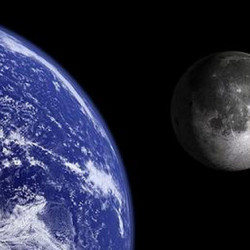
A view of Earth and the Moon against the blackness of space, showing Earth's blue oceans and white clouds.

Why is Earth’s Moon Leaving Us?

Most people don’t know this scientific fact, but the Earth’s Moon is slowing moving further from the Earth. Each year its orbit around the earth experiences a mean recession rate of 2.16 cm/year (less than an inch, since approximately 2.5 cm = 1 inch).

What causes this? As the moon’s gravity pulls on the Earth, the Earth’s gravity pulls on the moon, making the Moon slightly egg-shaped. In addition, tidal friction, caused by the movement of the tidal bulge around the Earth, takes energy out of the Earth and puts it into the Moon’s orbit, making the Moon’s orbit bigger and slower. Thus, not only is the orbit of the moon getting bigger, it is slowing down. Another startling fact is that the Earth’s rotation is slowing down because of the energy lost to the Moon’s orbit.

How real is this effect? To answer this question, let us consider how the Earth’s Moon was formed. Most astrophysicists contend the Moon was formed when a  proto-planet (named Theia after a Greek goddess) about the size of Mars collided with the Earth around 4.5 billion years ago. After the collision, the debris left over from the impact coalesced to form the Moon. Initially, our newly formed Moon orbited the Earth at 22,500 km (14,000 miles) away, compared with 402,336 km (~250,000 miles)  today.

This theory, regarding the Moon’s formulation and gradual recession from the Earth, has been mathematically modeled. Computer simulations of such an impact are consistent with the Earth Moon system we currently observe. There is also physical evidence. Paleontological evidence  of tidal rhythmites, also known as tidally laminated sediments, confirms the above theory. 

What is this going to mean to us on Earth? The speed at which the Moon is moving away from Earth will eventually affect life on the planet, but it will take billions of years for the effect to become significant. Given that Archaic Homo sapiens, the forerunner of anatomically modern humans, evolved between 400,000 and 250,000 years ago, and our progress from cave dwellers to space adventurers during our existence on Earth, it is likely we will have colonized new Earths long before the Moon’s orbit threatens our existence.

There are numerous scholarly papers that delineate the mathematics and palentological evidence in detail. However, they all come to essentially the same conclusion. The Moon is moving further away from the Earth each year.

Close-up of an ornate astronomical clock with zodiac signs and intricate golden details.

Five Facts about Time

Here are some interesting facts to ponder about of time:

  1. There is no widely accepted scientific definition of time as a stand alone entity. The reason for this is that according the Einstein’s theory of relativity, time and space are integrated into space-time.
  2. Some physicists argue that “time” has not always existed. According to the big bang theory, the universe started as an infinitely dense small energy ball that expanded to create the universe we now observe. Since some physicist argue that time is a measure of change, before the big bang, there was no change. Hence, there was no time.
  3. Time as measured by clocks will actually slow down in a reference frame moving close to the speed of light or in a high gravitational field. This has been experimentally proven.
  4. Time on Earth is slowing down. Our human perception of time comes from the rotation of the Earth relative to the Sun. Due to tidal friction from the sun and moon, the solar day is lengthening by 1.7 milliseconds each century as the Earth’s rotation slows down.
  5. Your significant other has their own definition of time. It is called a “jiffy.” The jiffy is an undefined time interval that can mean a faction of second to an hour or more. They generally use it in the phrase, “I’ll be ready in a jiffy.”  🙂
A dark cosmic-themed image with the word "IMMORTAL" featuring a planet as the letter "O".

5 Animals That Are Immortal

There are some animal species that, for unknown reason, are immortal. Unless an external force does them in, they could theoretically live forever. Here is the list:

1. The sea anemone is an immortal animal. Although it looks more like a brainless plant, it is an animal and defies everything we know about mortality. As sea anemone ages, it simply grows bigger. Unfortunately, they get wiped out at around age 80 by heat, water pollution, infections and collectors.

2. Lobsters don’t grow old and die. In fact, as far as scientists can tell they only die of external causes. They have no brain, and its central nervous system is about as simple as an insect. Lobsters don’t experience any change in metabolism or body-function as they get older. A one-hundred-year-old lobster will even continue eating, moving, procreating and growing. After a couple-hundred years, they can be the size of a large dog.

3. Aldabra giant tortoises is immortal. The males can weigh nearly 800 pounds. They eat vegetation. The oldest confirmed age of an Aldabra tortoise is 255 years, but some may have lived to be twice that age.

4. A rougheye rockfish is an immortal animal. They can live to be 200 years old or more. It grows to a maximum of about 38 inches in length, with the IGFA record weight being 14 lb 12 oz.

5. The hydra is a nearly microscopic simple freshwater animal and it is immortal. Every single cell in the hydra’s tiny body is constantly dividing and rejuvenating. Any injured, polluted or defective cells are diluted by the thousands of others. Because they are constantly replenishing their living cells, hydras do not age.

Although, in theory the above animals are immortal, environmental conditions eventually destroy every living “immortal” animal.


A detailed side view of a futuristic humanoid robot with intricate mechanical components against a plain background.

Are You Destined to Become a Cyborg?

The most basic definition of a cyborg is a being with both organic and cybernetic (artificial) parts. Taking this definition too literally, however, would suggest that almost every human in a civilized society is a cyborg. For example, if you have a dental filling, then you have an artificial part, and by the above definition, you are (literally) a cyborg. If we choose to restrict the definition to advanced artificial parts/machines, however, we must realize that many humans have artificial devices to replace hips, knees, shoulders, elbows, wrists, jaws, teeth, skin, arteries, veins, heart valves, arms, legs, feet, fingers, and toes, as well as “smart” medical devices, such as heart pacemakers and implanted insulin pumps to assist their organic functions. This more restrictive interpretation qualifies them as cyborgs. This definition, however, does not highlight the major element (and concern) regarding becoming a cyborg, namely, strong-AI brain implants.

While humans have used artificial parts for centuries (such as wooden legs), generally they still consider themselves human. The reason is simple: Their brains remain human. Our human brains qualify us as human beings. In my book, The Artificial Intelligence Revolution (2014), I predicted that by 2099 most humans will have strong-AI brain implants and interface telepathically with SAMs (i.e., strong artificially intelligent machines). I also argued the distinction between SAMs and humans with strong-AI brain implants will blur. Humans with strong-AI brain implants will identify their essence with SAMs. These cyborgs (strong-AI humans with cybernetically enhanced bodies), whom I call SAH (i.e., strong artificially intelligent human) cyborgs, represent a potential threat to humanity. It is unlikely that organic humans will be able to intellectually comprehend this new relationship and interface meaningfully (i.e., engage in dialogue) with either SAMs or SAHs.

Let us try to understand the potential threats and benefits related to what becoming a SAH cyborg represents. From the standpoint of intelligence, SAH cyborgs and SAMs will be at the top of the food chain. Humankind (organic humans) will be one step down. We, as organic humans, have been able to dominate the planet Earth because of our intelligence. When we no longer are the most intelligent entities on Earth, we will face numerous threats, similar to the threats we pose to other species. This will include extinction of organic humans, slavery of organic humans, and loss of humanity (strong-AI brain implants cause SAHs to identify with intelligent machines, not organic humans).

While the above summaries capsulize the threats posed by SAMs and SAHs, I have not discussed the benefits. There are significant benefits to becoming a SAH cyborg, including:

  • Enhanced intelligence: Imagine knowing all that is known and being able to think and communicate at the speed of SAMs. Imagine a life of leisure, where robots do “work,” and you spend your time interfacing telepathically with other SAHs and SAMs.
  • Immortality: Imagine becoming immortal, with every part of your physical existence fortified, replaced, or augmented by strong-AI artificial parts, or having yourself (your human brain) uploaded to a SAM. Imagine being able to manifest yourself physically at will via foglets (tiny robots that are able to assemble themselves to replicate physical structures).

Will you become a cyborg? Yes, many of us already qualify as cyborgs, based on the discussion above. Will we become SAH cyborgs? I think it likely, based on how quickly humans adopt medical technology. The lure of superior intelligence and immortality may be irresistible.

My point in writing this article was to delineate the pros and cons of becoming a SAH cyborg? Many young people will have to decide if that is the right evolutionary path for themselves.

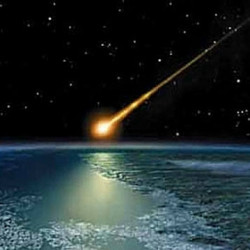
A bright meteor streaks across the night sky above Earth, illuminating the atmosphere and ocean below.

Is There Life on Another Earth-Like Planet?

Let’s start our discussion by asking a simple question. Is there another Earth-like planet? The answer is yes, and it is relatively close, by galactic standards. In my book, Unraveling the Universes Mysteries (2012), I mentioned the first Earth-like planet discovered, Kepler 22b. Kepler 22b is, to the best of our scientific measurements, Earth-like. Perhaps when our grandchildren’s grandchildren read this book or one like it, it will be old hat. We will have discovered countless Earth-like planets, and perhaps our grandchildren’s grandchildren will be living on one of them.

If it is Earth-like, will it have life on it? The odds are it will. Hard to believe? It will become more believable if we examine how life spreads around in the universe. To understand this phenomenon, we will start with our own planet, which we know had life on it when the dinosaurs became extinct 65 million years ago.

From the fossil record, the extinction of the dinosaurs most likely occurred when an asteroid, approximately 10 km in diameter (about six miles wide), and weighing more than a trillion tons, hit Earth. The impact killed all surface life in its vicinity, and covered the Earth with super-heated ash clouds. Eventually, those clouds spelled doom for most life on the Earth’s surface. However, this sounds like the end of life, not the beginning. It was the end of life for numerous species on Earth, like the dinosaurs. However, the asteroid impact did one other incredible thing. It ejected billions of tons of earth and water into space. Locked within the earth and water—was life. The asteroid’s impact launched life-bearing material into space. Consider this a form of cosmic seeding, similar to the way winds on Earth carry seeds to other locations to spread life.

Where did all this life-bearing earth and water go? A scientific paper from Tetsuya Hara and colleagues, Kyoto Sangyo University in Japan, (Transfer of Life-Bearing Meteorites from Earth to Other Planets, Journal of Cosmology, 2010, Vol 7, 1731-1742), provide an insightful answer to our question. Their estimate is that the ejected material spread throughout a significant portion of the galaxy. Of course, a substantial amount of material is going to end up on the Moon, Mars, and other planets close to us. However, the surprising part is that they calculate that a significant portion of the material landed on the Jovian moon Europa, the Saturnian moon Enceladus, and even Earth-like exoplanets. It is even possible that a portion of the ejected material landed on a comet, which in turn took it for a cosmic ride throughout the galaxy. If any life forms within the material survived the relatively short journey to any of the moons and planets in our own solar system, the survivors would have had over 64 million years to germinate and evolve.

Would the life forms survive an interstellar journey? No one knows. Here, though, are incredible facts about seeds. The United States National Center for Genetic Resources Preservation has stored seeds, dry and frozen, for over forty years. They claim that the seeds are still viable, and will germinate under the right conditions. The temperature in space, absent a heat source like a star, is extremely cold. Let me be clear on this point. Space itself has no temperature. Objects in space have a temperature due to their proximity to an energy source. The cosmic microwave background, the farthest-away entity we can see in space, is about 3 degrees Kelvin. The Kelvin temperature scale is often used in science, since 0 degrees Kelvin represents the total absence of heat energy. The Kelvin temperature scale can be converted to the more familiar Fahrenheit temperature scale, as illustrated in the following. An isolated thermometer, light years from the cosmic microwave background, would likely cool to a couple of degrees above Kelvin. Water freezes at 273 degrees Kelvin, which, for reference, is equivalent to 32 degrees Fahrenheit. Once the material escapes our solar system, expect it to become cold to the point of freezing. If the material landed on a comet, the life forms could have gone into hibernation, at whatever temperature exists on the comet. If an object in space passes close to radiation (such as sunlight), its temperature can soar hundreds of degrees Kelvin. Water boils at 373 degrees Kelvin, which is equivalent to 212 degrees Fahrenheit. We have no idea how long life-bearing material could survive in such conditions. However, our study of life in Earth’s most extreme environments demonstrates that life, like Pompeii worms that live at temperatures 176 degrees Fahrenheit, is highly adaptable. We know that forms of life, lichens, found in Earth’s most extreme environments, are capable of surviving on Mars. This was experimentally proven by using the Mars Simulation Laboratory (MSL) maintained by the German Aerospace Center. It is even possible that the Earth itself was seeded via interstellar material from another planet. Our galaxy is ten billion years old. Dr. Hara and colleagues estimate that if life formed on a planet in our galaxy when it was extremely young, an asteroid’s impact on such a planet could have seeded the Earth about 4.6 billion years ago.

Would any of the life-bearing material be able to reach Kepler 22b? The trip to Kepler 22b would have taken an Earth meteorite about 30 million years to reach it. However, the amount of material reaching Kepler 22b would likely be small, due to dispersion. To understand dispersion, consider a flashlight. If you shine the light on a nearby wall, you will see a bright spot on the wall. This is due to the high number of photons that concentrate on the wall to form the bright spot. However, if you move farther away from the wall, the bright spot becomes larger and dimmer. The photons are spreading over a larger area, and are not as concentrated. If you move back far enough, the bright spot will eventually fade, and only a faint glow will be seen on the wall. This phenomenon is called dispersion. The photons being emitted from the flashlight spread apart and become less dense the farther they travel from the flashlight. This same phenomenon occurred when the dinosaur-killing asteroid ejected material from the Earth. As it traveled farther from the Earth, the ejected material began to spread further apart (disperse). Even if a portion of life-bearing material made it to Kepler 22b, the smaller meteorites may have simply burned up in its atmosphere. This is what happens on Earth. Since Kepler 22b is twice the diameter of Earth, it is likely to have a dense atmosphere. Yet, the possibility of seeding Kepler 22b with Earth’s life-bearing material is still possible. If it happened, the life forms would have had 35 million years to evolve.

This is essentially a new way of thinking about the origin of life on Earth, and on other planets. This process of spreading life between planets is known as the panspermia theory of life. Once life forms on a planet, it appears that the cosmos itself takes care of spreading it throughout the galaxy. Therefore, you may begin to conclude that life on other planets would look a lot like life on Earth. That would be unlikely, unless the planet closely resembled Earth. As we see when we study life in extreme environments on Earth, life adapts to the environment. Therefore, on a large planet where gravity might be three times greater than on Earth, the life forms would have evolved to accommodate the increased gravity. Perhaps they would be closer to the ground, and have larger legs or even no legs, like snakes. Perhaps they have larger eyes if the planet has low light. Perhaps they have no eyes, like worms, if the planet is in darkness. Science fiction writers do an excellent job of conjuring up extraterrestrial life based on the planet from which the life forms originate. You can use your imagination to draw your own conclusions on what they might look like, based on their planet of origin.