Tag Archives: universe’s mysteries

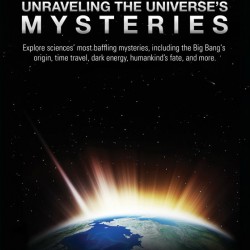
A dramatic view of Earth from space with the sun rising behind it, symbolizing cosmic mysteries and the universe's origin.

The Universe’s Unsolved Mysteries – Part 2/2 (Conclusion)

This is from the Introduction section of my book, Unraveling the Universe’s Mysteries. Enjoy!

The Twentieth Century stands as the golden age of science, yielding more scientific breakthroughs than any previous century. Yet, in the wake of all the scientific breakthroughs over the last century, profound mysteries emerged. To my eye, there appears a direct correlation between scientific discoveries and scientific mysteries. Often, it appears that every significant scientific breakthrough results in an equally profound mystery. I have termed this irony of scientific discovery the Del Monte Paradox, namely:

Each significant scientific discovery results in at least one profound scientific mystery.

I’ll use two examples to illustrate this paradox. For our first example, consider the discovery of the Big Bang theory. We will discuss the Big Bang theory in later chapters. For this discussion, please view it as a scientific framework of how the universe evolved. While the scientific community generally accepts the Big Bang theory, it is widely acknowledged that it does not explain the origin of the energy that was required to create the universe. Therefore, the discovery of the Big Bang theory left science with a profound mystery. Where did the energy originate to create a Big Bang? This is arguably the greatest mystery in science, and currently an area of high scientific focus. For the second example, consider the discovery we discussed above—the universe’s expansion is accelerating. This leaves us with another profound mystery. What is causing the universe’s expansion to accelerate? Numerous theories float within the scientific community to explain these mysteries. None has scientific consensus.

This book will investigate and provide insight on some of science’s greatest mysteries. Although there are numerous scientific mysteries, we will concentrate on three main “classes” of mysteries by section:

Section I: What Caused the Big Bang?

Section II: What Mysteries Still Baffle Modern Science?

Section III: Are We Alone?

All are highly active areas of scientific research, and bring us to the edge of scientific knowledge. All influence the direction scientific research is taking. One scientific breakthrough on any one of these mysteries could literally change the world of science.

The scientific community is not in complete consensus with numerous theories forwarded to address the mysteries. This is how it should be, since the theories reside on the edge of scientific knowledge. In a way, this is a righteous thing. Science moves forward via rigorous debate, experimentation, and independent validation of scientific findings and theories. All significant scientific theories have gone through this process. This is the scientific method. Remember that Einstein’s special theory of relativity, published in 1905, took about 15 years to gain acceptance by the majority of the scientific community (circa 1920). Here I’ll dispel a commonly held belief about Einstein. Most people have heard of Albert Einstein. They consider him one of the greatest scientists that ever lived. They believe that he jotted down equations, and created new theories, while working separate from the rest of the scientific community. This view of Einstein quietly working at his desk and dreaming up theories and equations is completely erroneous. Nothing could be further from the truth. Einstein let the experiments and observations of the scientific community guide his theoretical work. He cared deeply about the acceptance of his theories. In fact, in 1919, three years after publishing his general theory of relativity, he stated, “By an application of the theory of relativity to the taste of readers, today in Germany I am called a German man of science, and in England I am represented as a Swiss Jew. If I come to be regarded as a bête noire (black beast or a person strongly detested) the descriptions will be reversed, and I shall become a Swiss Jew for the Germans and a German man of science for the English!”

Einstein can rest in peace. Science holds the special theory of relativity as the golden standard, having withstood the rigor of over 100 years of scientific investigation. Elements of the general theory of relativity have also withstood vigorous investigation. To that point, scientists believe that other theories, such as string theory and dark energy, which we discuss in later chapters, needs to meet the same standards of scrutiny before they too can become scientific fact.

Scientific mysteries are intriguing. Almost everyone loves a good mystery. Unlike fiction, these mysteries are real. Their reality is wondrous and sometimes scary. This book will “unravel” each mystery by presenting the currently held scientific theories to explain the observed phenomena. However, in the absence of a viable scientific explanation, when possible I will propose an explanation based on original research. Regardless of the origin of the explanations, please understand, we are on the edge of science where scientific proof is elusive, and scientific consensus is rare. Therefore, consider all such theories with an open, but cautious mind. Nobel Laureate Max Born said, “I am now convinced that theoretical physics is actually philosophy.” Therefore, often the explanation will read like metaphysics or even science fiction. This is how life is on the edge of science, where mysteries abound.

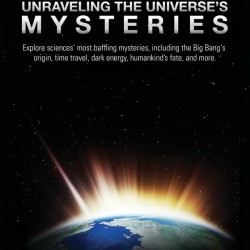
A glowing sunrise over Earth from space with text about exploring the universe's mysteries.

The Universe’s Unsolved Mysteries – Part 1/2

This is the Introduction section of my book, Unraveling the Universe’s Mysteries. Enjoy!

The strides that science made in the Twentieth and early part of the Twenty-First Century are astounding. At the beginning of the Twentieth Century, science held three theories as universal truths, namely:

  1. Time was an absolute, independent of distance and movement of observers relative to an event.
  2. The universe consisted of the Milky Way galaxy.
  3. The universe was eternal and static.

However, the strongly held theories of the greatest scientific minds of the time proved to be false. I will briefly examine each theory and the empirical evidence that caused its demise.

First, the science community up to the early part of the Twentieth Century believed that time was an absolute. This meant time was independent of the position and movement of an observer relative to an event. This almost self-evident theory about time was about to be shattered. In 1905, a young Albert Einstein developed his special theory of relativity. It is termed “special” because it applied only to inertial frames of reference. An inertial frame of reference is one that is at either rest or moving with a constant velocity.

The special theory of relativity offered two hypotheses. 1) The laws of physics are the same in all inertial frames of reference. 2) The speed of light is a constant in a vacuum—independent of the movement of the emission source in all inertial frames. To understand the second hypothesis, consider this example. If you are in an open-top convertible car that is traveling down the highway at sixty miles per hour, you are in an inertial frame of reference. If you throw a ball in the same direction that the car is going, the total speed of the ball will be equal to the speed of the car plus the speed of ball as it leaves your hand. If you are able to throw the ball at thirty miles per hour, the total speed of the ball as it leaves your hand is ninety miles per hour. We get this speed by adding the speed of the car to the speed you are able to throw the ball. Now, let’s pretend you have a flashlight, an emission source, and an observer is able to measure the speed of light as it leaves the flashlight. The result the observer would measure is that the speed of light would independent of the car’s speed. In effect, the speed of the car does not make the light go faster. Even if the car stops, the speed of light from the flashlight would equal the speed of light of the moving car. For this example, I have ignored atmospheric effects and considered the observer stationary. This is counter intuitive, but true. The speed of light is the same regardless of the speed of the car (inertial frame). The implications of special relativity became enormous. One significant implication demonstrated that time was highly dependent on the relative motion of both the observer and the event. This discovery eventually led to the development of space-time as a coordinate system. The special theory of relativity and the general theory of relativity, two highly successful theories of modern science, use space-time as a coordinate system.

A second theory that the science community held about the universe related to its size. Until the 1917 completion of the 100-inch Hooker Telescope at the Mount Wilson Observatory, science had no way of knowing other galaxies existed. Therefore, the scientific community held that the universe consisted of the Milky Way galaxy, and nothing else. In fact, this is what they taught our grandparents as schoolchildren.

Surprisingly, the German philosopher Immanuel Kant (1724-1804), using reasoning, suggested a hundred years earlier that our galaxy was one of numerous “island universes.” Unfortunately, Kant’s view would have to wait more than a hundred years for telescope technology to prove him right. Even when early astronomers saw the faint lights of other galaxies in their crude telescopes, they believed the observed phenomena to be part of the Milky Way. That view of the universe was about to dramatically change.

In 1919, a young astronomer, Edwin Hubble, arrived at the Mount Wilson Observatory in California. As chance would have it, his arrival coincided with the completion of the Hooker Telescope. At the time, it was the world’s largest telescope, and the only one able to observe other galaxies beyond the Milky Way. In 1924, Edwin Hubble, using the 100-inch telescope at Mt. Wilson, discovered the Andromeda galaxy, a sister galaxy similar to our own Milky Way. This completely shattered another strongly held scientific belief. The universe was larger than previously thought. In fact, today we know that the universe has billions of galaxies.

Lastly, science held that the universe was eternal and static. This meant it had no beginning. Nor would it ever end. In other words, the universe was in “steady state.” At the beginning of the Twentieth Century, as I mentioned above, telescopes were crude and unable to focus on other galaxies. In addition, no theories of the universe were causing science to doubt the current dogma of a steady-state universe. All of that was about to change.

In 1916, Albert Einstein developed his general theory of relativity. It was termed “general” because it applied to all frames of reference, not only frames at rest or moving at a constant velocity (inertial frames). The general theory of relativity predicted that the universe was either expanding or contracting. This should have been a pivotal clue that the current scientific view of the universe as eternal and static might be wrong. However, Einstein’s paradigm of an eternal and static universe was so strong, he disregarded his own results. He quickly reformulated the equations incorporating a “cosmological constant.” With this new mathematical expression plugged into the equations, the equations of general relativity yielded the answer Einstein believed was right. The universe was in a steady-state. This means it was neither expanding nor contracting. The world of science accepted this, and continued entrenched in its belief of a steady-state universe. However, as telescopes began to improve, this scientific theory was destined to be shattered.

In 1929, Edwin Hubble, using the new Mt. Wilson 100-inch telescope, discovered the universe was expanding. In time, other astronomers confirmed Hubble’s discovery. This forced Einstein to call the cosmological constant his “greatest blunder.” This completely shattered the steady-state theory of the universe. In fact, this discovery was going to pave the way to an even greater discovery, the Big Bang theory, but more about that later.

In 1900, and for centuries before that, the greatest scientific minds of the time held the above three theories sacred. However, each theory crumbled as measurement techniques improved, and new theories evolved. This is a pivotal point. Science is rapidly evolving, and scientific knowledge doubles about every 10 years. We are constantly gathering new data that challenges our understanding of science, and that often leads to new mysteries. As soon as we become confident and comfortable in our grasp of reality, a new discovery turns our world upside down. For example, until 1998, every cosmologist knew the universe was expanding, but commonly held the belief that gravity would eventually slow down the expansion, and cause the universe to contract in a “Big Crunch.” The Big Crunch would result in an infinitely dense energy point similar to the infinitely dense energy point that existed at the instant before the Big Bang. In effect, the commonly held view was the universe would first expand, via the Big Bang, and then gravity would eventually cause it to contract, via the Big Crunch, to the infinitely dense energy point just prior to the expansion. Their confidence in this view abounded, and three scientists, Saul Perlmutter, Brian P. Schmidt, and Adam G. Riess, decided to measure it. To the scientific world’s astonishment, they discovered the universe was not only expanding, but the expansion was accelerating. In 2011, these three received the Nobel Prize for this remarkable discovery.

Stay tuned for part 2.

Extraterrestrial Intelligence

SETI Issues (video) — Extraterrestrial Intelligence Series – Part 3

https://www.youtube.com/watch?v=yJOhT4KkYW0&feature=c4-overview&list=UUSAq8CarQrrx0iviTvGxspA

SETI Issues — Extraterrestrial Intelligence – In the segment, physicist Louis Del Monte discusses the challenges associated with the search for extraterrestrial intelligence.

This subject is also fully discussed in Louis Del Monte’s new book, Unraveling the Universe’s Mysteries (available in paper back or as an eBook on Amazon https://amzn.to/Zo1TGn and Barnes & Noble https://bit.ly/RAv4FL).

For more information about Louis Del Monte, please follow Louis Del Monte on Twitter (https://twitter.com/delmontelouis), and view his Facebook page at https://www.facebook.com/DelMonte.Louis