Tag Archives: strong artificially intelligent machines

A-life

Should We Consider Strong Artificially Intelligent Machines (SAMs) A New Life-Form?

What is a strong artificially intelligent machine (SAM)? It is a machine whose intelligence equals that of a human being. Although no SAM currently exists, many artificial intelligence researchers project SAMs will exist by the mid-21st Century. This has major implications and raises an important question, Should we consider SAMs a new life-form? Numerous philosophers and AI researchers have addressed this question. Indeed, the concept of artificial life dates back to ancient myths and stories. The best known of these is Mary Shelley’s novel Frankenstein, published in 1823. In 1986, American computer scientist Christopher Langton, however, formally established the scientific discipline that studies artificial life (i.e., A-life).

No current definition of life considers any A-life simulations to be alive in the traditional sense (i.e., constituting a part of the evolutionary process of any ecosystem). That view of life, however, is beginning to change as artificial intelligence comes closer to emulating a human brain. For example, Hungarian-born American mathematician John von Neumann (1903–1957) asserted, “life is a process which can be abstracted away from any particular medium.” In effect, this suggests that strong AI represents a new life-form, namely A-life.

In the early 1990s, ecologist Thomas S. Ray asserted that his Tierra project, a computer simulation of artificial life, did not simulate life in a computer, but synthesized it. This begs the following question, “How do we define A-life?”

The earliest description of A-life that comes close to a definition emerged from an official conference announcement in 1987 by Christopher Langton, published subsequently in the 1989 book Artificial Life: The Proceedings of an Interdisciplinary Workshop on the Synthesis and Simulation of Living Systems:

Artificial life is the study of artificial systems that exhibit behavior characteristics of natural living systems. It is the quest to explain life in any of its possible manifestations, without restriction to the particular examples that have evolved on Earth. This includes biological and chemical experiments, computer simulations, and purely theoretical endeavors. Processes occurring on molecular, social, and evolutionary scales are subject to investigation. The ultimate goal is to extract the logical form of living systems.

There is little doubt that both philosophers and scientists lean toward recognizing A-life as a new life-form. For example, noted philosopher and science fiction writer Sir Arthur Charles Clarke (1917–2008) wrote in his book 2010: Odyssey Two, “Whether we are based on carbon or on silicon makes no fundamental difference; we should each be treated with appropriate respect.” Noted cosmologist and physicist Stephen Hawking (b. 1942) darkly speculated during a speech at the Macworld Expo in Boston, “I think computer viruses should count as life. I think it says something about human nature that the only form of life we have created so far is purely destructive. We’ve created life in our own image” (Daily News, [August 4, 1994]). The main point is that we are likely to consider strong AI a new form of life.

After reading this post, What do you think?
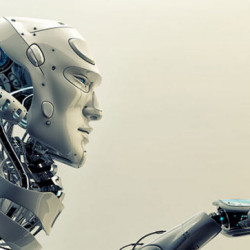
A detailed side view of a futuristic humanoid robot with intricate mechanical components against a plain background.

Are You Destined to Become a Cyborg?

The most basic definition of a cyborg is a being with both organic and cybernetic (artificial) parts. Taking this definition too literally, however, would suggest that almost every human in a civilized society is a cyborg. For example, if you have a dental filling, then you have an artificial part, and by the above definition, you are (literally) a cyborg. If we choose to restrict the definition to advanced artificial parts/machines, however, we must realize that many humans have artificial devices to replace hips, knees, shoulders, elbows, wrists, jaws, teeth, skin, arteries, veins, heart valves, arms, legs, feet, fingers, and toes, as well as “smart” medical devices, such as heart pacemakers and implanted insulin pumps to assist their organic functions. This more restrictive interpretation qualifies them as cyborgs. This definition, however, does not highlight the major element (and concern) regarding becoming a cyborg, namely, strong-AI brain implants.

While humans have used artificial parts for centuries (such as wooden legs), generally they still consider themselves human. The reason is simple: Their brains remain human. Our human brains qualify us as human beings. In my book, The Artificial Intelligence Revolution (2014), I predicted that by 2099 most humans will have strong-AI brain implants and interface telepathically with SAMs (i.e., strong artificially intelligent machines). I also argued the distinction between SAMs and humans with strong-AI brain implants will blur. Humans with strong-AI brain implants will identify their essence with SAMs. These cyborgs (strong-AI humans with cybernetically enhanced bodies), whom I call SAH (i.e., strong artificially intelligent human) cyborgs, represent a potential threat to humanity. It is unlikely that organic humans will be able to intellectually comprehend this new relationship and interface meaningfully (i.e., engage in dialogue) with either SAMs or SAHs.

Let us try to understand the potential threats and benefits related to what becoming a SAH cyborg represents. From the standpoint of intelligence, SAH cyborgs and SAMs will be at the top of the food chain. Humankind (organic humans) will be one step down. We, as organic humans, have been able to dominate the planet Earth because of our intelligence. When we no longer are the most intelligent entities on Earth, we will face numerous threats, similar to the threats we pose to other species. This will include extinction of organic humans, slavery of organic humans, and loss of humanity (strong-AI brain implants cause SAHs to identify with intelligent machines, not organic humans).

While the above summaries capsulize the threats posed by SAMs and SAHs, I have not discussed the benefits. There are significant benefits to becoming a SAH cyborg, including:

  • Enhanced intelligence: Imagine knowing all that is known and being able to think and communicate at the speed of SAMs. Imagine a life of leisure, where robots do “work,” and you spend your time interfacing telepathically with other SAHs and SAMs.
  • Immortality: Imagine becoming immortal, with every part of your physical existence fortified, replaced, or augmented by strong-AI artificial parts, or having yourself (your human brain) uploaded to a SAM. Imagine being able to manifest yourself physically at will via foglets (tiny robots that are able to assemble themselves to replicate physical structures).

Will you become a cyborg? Yes, many of us already qualify as cyborgs, based on the discussion above. Will we become SAH cyborgs? I think it likely, based on how quickly humans adopt medical technology. The lure of superior intelligence and immortality may be irresistible.

My point in writing this article was to delineate the pros and cons of becoming a SAH cyborg? Many young people will have to decide if that is the right evolutionary path for themselves.

Digital representation of a human head with numbers and data streams symbolizing artificial intelligence and data processing.

Will Science Make Us Immortal?

Several futurists, including myself, have predicted that by 2099 most humans will have strong-artificially intelligent brain implants and artificially intelligent organ/body part replacements. In my book, The Artificial Intelligence Revolution, I term these beings SAH (i.e., strong artificially intelligent human) cyborgs. It is also predicted that SAH cyborgs will interface telepathically with strong artificially intelligent machines (SAMs). When this occurs, the distinction between SAMs and SAHs will blur.

Why will the majority of the human race opt to become SAH cyborgs? There are two significant benefits:

  1. Enhanced intelligence: Imagine knowing all that is known and being able to think and communicate at the speed of SAMs. Imagine a life of leisure, where robots do “work,” and you spend your time interfacing telepathically with other SAHs and SAMs.
  2. Immortality: Imagine becoming immortal, with every part of your physical existence fortified, replaced, or augmented by strong-AI artificial parts, or having yourself (your human brain) uploaded to a SAM. Imagine being able to manifest yourself physically at will via foglets (tiny robots that are able to assemble themselves to replicate physical structures). According to noted author Ray Kurzweil, in the 2040s, humans will develop “the means to instantly create new portions of ourselves, either biological or non-biological” so that people can have “a biological body at one time and not at another, then have it again, then change it, and so on” (The Singularity Is Near, 2005).

Based on the above prediction, the answer to the title question is yes. Science will eventually make us immortal. However, how realistic is it to predict it will occur by 2099? To date, it appears the 2099 prediction regarding most of humankind becoming SAH cyborgs is on track. Here are two interesting articles that demonstrate it is already happening:

  1. In 2011 author Pagan Kennedy wrote an insightful article in The New York Times Magazine, “The Cyborg in Us All” that states: “Thousands of people have become cyborgs, of a sort, for medical reasons: cochlear implants augment hearing and deep-brain stimulators treat Parkinson’s. But within the next decade, we are likely to see a new kind of implant, designed for healthy people who want to merge with machines.”
  2. A 2013 article by Bryan Nelson, “7 Real-Life Human Cyborgs” (www.mnn.com/leaderboard/stories/7-real-life-human-cyborgs), also demonstrates this point. The article provides seven examples of living people with significant strong-AI enhancements to their bodies who are legitimately categorized as cyborgs.

Based on all available information, the question is not whether humans will become cyborgs but rather when a significant number of humans will become SAH cyborgs. Again, based on all available information, I project this will occur on or around 2040. I am not saying that in 2040 all humans will become SAH cyborgs, but that a significant number will qualify as SAH cyborgs.

In other posts, I’ve discussed the existential threat artificial intelligence poses, namely the loss of our humanity and, in the worst case, human extinction. However, if ignore those threats, the upside to becoming a SAH cyborg is enormous. To illustrate this, I took an informal straw poll of friends and colleagues, asking if they would like to have the attributes of enhanced intelligence and immortality. I left out the potential threats to their humanity. The answers to my biased poll highly favored the above attributes. In other words, the organic humans I polled liked the idea of being a SAH cyborg. In reality if you do not consider the potential loss of your humanity, being a SAH cyborg is highly attractive.

Given that I was able to make being a SAH cyborg attractive to my friends and colleagues, imagine the persuasive powers of SAMs in 2099. In addition, it is entirely possible, even probable, that numerous SAH cyborgs will be world leaders by 2099. Literally, organic humans will not be able to compete on an intellectual or physical basis. With the governments of the world in the hands of SAH cyborgs, it is reasonable to project that all efforts will be made to convert the remaining organic humans to SAH cyborgs.

The quest for immortality appears to be an innate human longing and may be the strongest motivation for becoming a SAH cyborg. In 2010 cyborg activist and artist Neil Harbisson and his longtime partner, choreographer Moon Ribas, established the Cyborg Foundation, the world’s first international organization to help humans become cyborgs. They state they formed the Cyborg Foundation in response to letters and e-mails from people around the world who were interested in becoming a cyborg. In 2011 the vice president of Ecuador, Lenin Moreno, announced that the Ecuadorian government would collaborate with the Cyborg Foundation to create sensory extensions and electronic eyes. In 2012 Spanish film director Rafel Duran Torrent made a short documentary about the Cyborg Foundation. In 2013 the documentary won the Grand Jury Prize at the Sundance Film Festival’s Focus Forward Filmmakers Competition and was awarded $100,000.

At this point you may think that being a SAH cyborg makes logical sense and is the next step in humankind’s evolution. This may be the case, but humankind has no idea how taking that step may affect what is best in humanity, for example, love, courage, and sacrifice. My view, based on how quickly new life-extending medical technology is accepted, is that humankind will take that step. Will it serve us? I have concerns that in the long term it will not serve us, if we do not learn to control the evolution of SAMs, or what is commonly called the “intelligence explosion.” However,  I leave the final judgement to you.