Tag Archives: nanotechnology

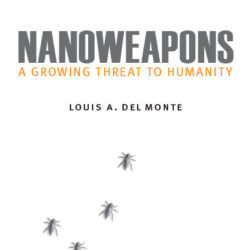
Book cover titled 'Nanoweapons: A Growing Threat to Humanity' by Louis A. Del Monte with small insect-like figures.

Nanoweapons: A Growing Threat to Humanity (Book)

My new book and the first in its genre, Nanoweapons: A Growing Threat to Humanity, is now available at a special introductory price of 30% off from all popular booksellers.

From the Publisher, Potomac Books

Nearly Invisible Weapons of Mass Destruction 

 
Nanoweapons just might render humanity extinct in the near future—a notion that is frightening and shocking but potentially true. In Nanoweapons Louis A. Del Monte describes the most deadly generation of military weapons the world has ever encountered. With dimensions one-thousandth the diameter of a single strand of human hair, this technology threatens to eradicate humanity as it incites world governments to compete in the deadliest arms race ever.

In his insightful and prescient account of this risky and radical technology, Del Monte predicts that nanoweapons will dominate the battlefield of the future and will help determine the superpowers of the twenty-first century. He traces the emergence of nanotechnology, discusses the current development of nanoweapons—such as the “mini-nuke,” which weighs five pounds and carries the power of one hundred tons of TNT—and offers concrete recommendations, founded in historical precedent, for controlling their proliferation and avoiding human annihilation. Most critically, Nanoweapons addresses the question: Will it be possible to develop, deploy, and use nanoweapons in warfare without rendering humanity extinct?

Louis A. Del Monte is an award-winning physicist, featured speaker, and is the chief executive officer of Del Monte and Associates, Inc. During his thirty-year career as a physicist and business executive at IBM and Honeywell, he led the development of microelectronics and sensors and developed patents fundamental to the fabrication of integrated circuits. He is the author of The Artificial Intelligence Revolution: Will Artificial Intelligence Serve Us or Replace Us? and How to Time Travel: Explore the Science, Paradoxes, and Evidence.

Praise

Louis Del Monte provides a futurist clarion call for people to start thinking and talking about this emerging technology—a technology fraught with the potential for great good and great harm.”—Col. Thomas R. Lujan, U.S. Army (Ret.), attorney at law

Nanoweapons opens the cloak of secrecy on the developing area of nanotechnologies and how societies may use them in the future for good and evil. A very captivating topic.”—Tamara Bratland, engineer for a Fortune 500 medical device company

“A very informative read. Nanotechnology can enhance our lives or eradicate humankind. This book can help preserve our future.”—Richard Spielberger, former Honeywell Engineer Fellow

Get Your Copy Now At 30% Off

 

Download Publisher PDF Information and Order Form

At Your Favorite Local Bookstore

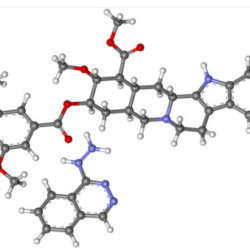
Molecular structure model showing atoms and bonds, with carbon, oxygen, and nitrogen atoms in a complex organic compound.

What is nanotechnology?

According to the United States National Nanotechnology Initiative’s website, nano.gov, “Nanotechnology is science, engineering, and technology conducted at the nanoscale, which is about 1 to 100 nanometers.” This begs a question, What is a nanometer? In simple terms, a nanometer is approximately 1/100,000 of the diameter of a human hair. A nanometer is so small that it is impossible to see it with the naked eye or even with an optical microscope. In fact, the hydrogen atom is ten times larger than a nanometer. Given these dimensions, you may wonder, How is it possible for scientists to work at the nano-level? The simple answer is that until 1980s, it was not possible. This begs the question, What changed in 1980s?

Three critical events came together in 1981 through 1989. The were:

  1. The invention of the “scanning tunneling microscope” (STM) in 1981 by Gerd Binnig and Heinrich Rohrer at IBM Zurich Research Laboratory. The STM enabled scientists to actually see atoms for the first time in history. Gerd Binnig and Heinrich Rohrer received a Nobel Prize in Physics in 1986 for their invention.
  2. K. Eric Drexler published his 1986 landmark book, Engines of Creation: The Coming Era of Nanotechnology, in which he suggested the control of atoms to build nanoscale machines.
  3. Don Eigler, an IBM physicist, used the scanning tunneling microscope (STM) tip in 1989 to manipulate individual atoms to write the letters IBM. This was the first time atoms were manipulated at the atomic level.

Taken as a whole, the above events gave rise to the fields of nanotechnology. Notice, I used the plural, “fields.” This is intentional. For example, numerous diverse scientific fields engage in nanotechnology research and application, including the fields of surface science, organic chemistry, molecular biology, semiconductor physics, and microfabrication. The common element they share is that the final application has at least one element with a dimension in the nanoscale, 1-100 nanometers. From this standpoint, it is best to consider nanotechnology as a category of technologies, characterized by having at least one dimension in the nanoscale.

You may think that nanotechnology is a relatively new capability. That statement would be true for humanity. However, Mother Nature has been working at the nanoscale for billions of years. Almost all natural process start at the nanoscale. For example, consider an abalone shell. Mother nature builds it layer-by-layer at the nanoscale. Although the shell is 98% calcium carbonate, its nano structure makes it 3000 times stronger than rocks with the same chemical composition. This is just one example. The are countless others. Even human beings rely on nano processes taking place within our bodies. Our DNA (i.e., deoxyribonucleic acid), which is found in every cell of our bodies, is only 2 nanometers in diameter. Even though it is extremely small, it carries all the genetic instructions for the development, function, and reproduction of our human bodies.

The goal of this post is to address the question, What is nanotechnology? The answer is actually simple. Nanotechnology is science, engineering, and technology conducted at the nanoscale, which is about 1 to 100 nanometers. It is not a single technology, but a category of technologies that result in applications with at least one dimension in the nanoscale (1-100 nanometers). I provided the short history and examples to afford those that read this post greater insight. What are your thoughts?


A book secured with metal chains and padlocks, along with a computer mouse and USB drive, symbolizing digital rights or information protection.

Are Nanoweapons Secret?

First, let us address, What are nanoweapons? Here is a simple definition: Nanoweapons are any military technology that exploits the power of nanotechnology. This begs another question, What is nanotechnology? According to the United States National Nanotechnology Initiative’s website, nano.gov, “Nanotechnology is science, engineering, and technology conducted at the nanoscale, which is about 1 to 100 nanometers.” To visualize a nanometer, it is approximately 1/100,000 the diameter of a typical human hair. Therefore, we are discussing weapons that have one or more features that are invisible to the naked eye.

The existence of nanoweapons is not a secret, but the United States and other governments are extremely tight lipped about their existence. Even though the United States and other countries are deploying nanoweapons, they garner little to no media coverage. Why is this?

The mission and goals of the United States National Nanotechnology Initiative intentionally omits any mention of nanoweapons, but allocates a significant portion of its budget to their development. In addition, work on nanoweapons is likely classified “Secret” or “Top Secret.” Let us understand these classifications. Top Secret applies to information that, in the wrong hand, could cause exceptionally grave damage to the national security. Secret applies to information that could cause serious damage to the national security. This means the scientists working on nanoweapons cannot publish their work in a scientific journal or present their work at a public conference. As a result, a Google search for “nanoweapons” yields .07% (search returns) relative to a similar Google search for “nuclear weapons.” Although there is a mountain of information on nanotechnology, only about one page in every 2,500 pages describes the use of nanotechnology for military applications.

What does all this mean? The existence of nanoweapons is not secret. You can actually do a Google search and find references to them. But, the specific nanoweapons are secret. Given this fact, you may ask, How did I write a book on nanoweapons (Nanoweapons: A Growing Threat to Humanity)?

Although, the development of nanoweapons continues under a cloak of secrecy by every nation involved in their development, by researching the publicly available information, it is possible to make educated judgments regarding the specific types of nanoweapons in development, as well as when they will be deployed. That is exactly what I did to write my latest book, Nanoweapons: A Growing Threat to Humanity. However, a word of caution is in order. Any information about nanoweapons currently found in the public domain is likely one or two generations behind current developments and deployments. This makes nanoweapons currently under development or being deployed difficult to predict, but as my book demonstrates not impossible.

One critical finding from my research is that China, Russia and the United States are competing in a multi-billion-dollar nanoweapons arms race. Why? Nanoweapons promise to become more devastating than nuclear weapons. This means the superpowers of the future will be those nations with the most capable nanoweapons.


A clear glass king chess piece stands prominently against a black background with frosted pawns behind it.

The Nanoweapons Cold War

Many believe the collapse of the Soviet Union marked the end of the Cold War. If we confine ourselves to only consider military might based on conventional and nuclear weapons, they are correct. The United States is widely considered the only superpower.

Before you take a long sigh of relief, understand a new type of Cold War emerged from the rubble. Knowing well they they cannot match the United States’ military across the board, the Russian Federation and now China are spending their military budgets to gain asymmetrical military advantages over the United States. One key area of focus is nanoweapons. Nanowek.com, the leading nanotechnology portal, reports, “All major powers are making efforts to research and develop nanotechnology-based materials and systems for military use.”

The National Nanotechnology Initiative (NNI), launched by President Bill Clinton in 2000,  coordinates, collaborates, and funds the nanotechnology research and development activities of 25 Federal agencies . To date, the United States government has channeled over $20,000,000,000 through NNI. In addition, each branch of the United States military performs its own nanotechnology research and development. As a result, a new class of weapons, nanoweapons, are already being deployed, from advanced laser weapons to insect size drones.

The actual amount that is spent on nanoweapons remains Top Secret, but based on publicly published budget allocations, it is reasonable to estimate its in the many $Bs annually. For example, about 15% of the NNI budget alone is  focused on DOD projects. This excludes federal agencies like DARPA (Defence Advanced Research Project Agency), which focuses on advanced military weapons. In addition, about 10% of the total defense budget of the United States (estimated at $534.3 billion in 2016) is classified, typically termed the “black budget.” Given the secrecy that surrounds nanoweapons funding, it is next to impossible to discern the exact nanoweapons budget of the United States. But, it’s relatively easy to estimate that many $Bs are being spent annually on nanoweapons development and deployment.

What fuels this new Nanoweapons Cold War? One simple paradigm, the superpowers of the future will be those nations with the most capable nanoweapons. If you have not read my earlier posts, let me digress and define nanoweapons. Nanoweapons are any military technology that exploits the power of nanotechnology. This begs another question, What is nanotechnology? According to the United States National Nanotechnology Initiative’s website, nano.gov, “Nanotechnology is science, engineering, and technology conducted at the nanoscale, which is about 1 to 100 nanometers.” To understand this in simple terms, the diameter of a typical human hair equals 80,000- 100,000 nanometers. Ironically, the next big thing in military weapons technology will be small, essentially invisible to the naked eye.

The power of nanoweapons has not escaped the attention of the Russian Federation or China, as well as other countries like Germany and France. China in particular is doing everything it can to “hack” United States nanoweapons technology, as well as develop their own. Russia has even set up a “public” company, Rusnano, to pursue nanotechnology and nanoweapons. I put the word “public” in quotes because the Russian Federation currently owns all the stock of Rusnano.

The main take away from this post is that we are in a new cold war, a Nanoweapons Cold War. China and Russia are squaring off with the United States to gain an asymmetrical nanoweapons advantage. To date, the United States has the clear lead. However, recall that during the first Cold War, Russia was able to maintain near military parity with the United States via espionage and asymmetrical funding. I expect similar behavior from China and the Russian Federation during the Nanoweapons Cold War.

Image courtesy of Jonas Staub and Dreamstime Stock Photos

Silhouette of a helicopter against a fiery orange and red sky at sunset.

How Are Wars Won in the 21st Century?

When most of us think about winning a war, we visualize a large theater conflict, similar to WW I and II, and winning means forcing an enemy to surrender. However, that is not the nature of today’s conflicts. Without going into excessive detail, the nature of war today has numerous shades of conflict. In fact, we are engaged in a war as I write. For example, we have been at “war,” via counter insurgency and stability operations in the Middle East, following our invasion of Iraq in 2003.

Many think the United States can win any type of war, due to our military superiority. I also believe that, but perhaps for a different reason than some. When I think of military superiority, I don’t think about counting troops, tanks, battleships, fighter jets, or nuclear weapons. Why? Because, numbers alone don’t win wars. For example, in the fist Gulf War the United States and its allies destroyed many of the Russian made tanks of Saddam Hussein before they could even get a shot off. Superiority in warfare is critically dependent on technologically superior weapons and a well-trained military. In that regard, two technologies will play a critical warfare role in the 21st century. They are artificial intelligence and nanoweapons.

Most people are aware of some of the roles artificial intelligence plays, having seen news reports and video coverage of smart bombs and drones. In reality, those applications are only the proverbial “tip of the iceberg.” The United States military uses artificial intelligence in a wide array of applications, from medical diagnosis to robots that detect and defuse improvised explosive devices (IEDs).

In stark contrast, most people have never heard of nanoweapons. Yet, nanoweapons are being developed and deployed by numerous nations, including most notably the United States, China, and Russia. This begs a question, What are nanoweapons? Nanoweapons are any military technology that exploits the power of nanotechnology. This begs another question, What is nanotechnology? According to the United States National Nanotechnology Initiative’s website, nano.gov, “Nanotechnology is science, engineering, and technology conducted at the nanoscale, which is about 1 to 100 nanometers.” For perspective, the diameter of a typical human hair equals 80,000- 100,000 nanometers.

Obviously, in contrast to smart bombs, drones, and nuclear weapons, nanoweapons garner few headlines and little video coverage. Yet, nanoelectronic integrated circuits, nanoparticles, nanosensors, and nanorobotics are becoming fundamental building blocks for numerous new weapons systems, from high tech laser weapons to mini-nukes. Although, the media has reported on the Navy’s high tech laser, little has been written about mini-nukes. Yet, there is evidence that mini-nukes are under development by the United States and several other nations. You may wonder, What are mini-nukes? Mini-nukes are small nano-enhanced nuclear bombs with a minuscule amount fissionable material. Mini-nukes can result in an explosion, depending on construction, that equates from one to a hundred tons of conventional explosives, with almost no radioactive fallout. For this reason, the United States may classify mini-nukes as conventional weapons, which will increase their likely hood of use in combat. Again, these are only a few examples to illustrate the development and deployment of nanoweapons.

Unfortunately, nanoweapons will ultimately evolve to become weapons of mass destruction, more problematic nuclear weapons. I will discuss this more fully in future posts. My intent in this post is to make one significant point. The outcome of future conflicts may be determined by which adversary has the most capable nanoweapons. In fact, nanoweapons will likely determine the superpowers of the 21st century. This too will become obvious in future posts.