Tag Archives: louis del monte

Close-up view of translucent blue spherical cells or microscopic organisms against a dark background.

Virtual Particles – Something from Nothing – Part 2/3

This three part post is the first chapter of my book, Unraveling the Universe’s Mysteries. Here is part 2. Enjoy!

According to Paul Dirac, a British physicist and Nobel Prize Laureate, who first postulated virtual particles, empty space (a vacuum) consists of a sea of virtual electron-positron pairs, known as the Dirac sea. This is not a historical footnote. Modern-day physicists, familiar with the Dirac-sea theory of virtual particles, claim there is no such thing as empty space. They argue it contains virtual particles.

This raises yet another question. What is a positron? A positron is the mirror image of an electron. It has the same mass as an electron, but the opposite charge. The electron is negatively charged, and the positron is positively charged. If we consider the electron matter, the positron is antimatter. For his theoretical work in this area, science recognizes Paul Dirac for discovering the “antiparticle.” Positrons and antiparticles are all considered antimatter.

Virtual particle-antiparticle pairs pop into existence in empty space for brief periods, in agreement with the Heisenberg uncertainty principle, which gives rise to quantum fluctuations. This may appear highly confusing. A few paragraphs back we said that the Heisenberg uncertainty principle embodies the statistical nature of energy at the quantum level, which implies that energy at the quantum level can vary. Another way to say this is to state the Heisenberg uncertainty principle gives rise to quantum fluctuations.

What is a quantum fluctuation? It is a theory in quantum mechanics that argues there are certain conditions where a point in space can experience a temporary change in energy. Again, this is in accordance with the statistical nature of energy implied by the Heisenberg uncertainty principle. This temporary change in energy gives rise to virtual particles. This may appear to violate the conservation of energy law, arguably the most revered law in physics. It appears that we are getting something from nothing. However, if the virtual particles appear as a matter-antimatter pair, the system remains energy neutral. Therefore, the net increase in the energy of the system is zero, which would argue that the conservation of energy law remains in force.

No consensus exists that virtual particles always appear as a matter-antimatter pair. However, this view is commonly held in quantum mechanics, and this creation state of virtual particles maintains the conservation of energy. Therefore, it is consistent with Occam’s razor, which states that the simplest explanation is the most plausible one, until new data to the contrary becomes available. The lack of consensus about the exact nature of virtual particles arises because we cannot measure them directly. We detect their effects, and infer their existence. For example, they produce the Lamb shift, which is a small difference in energy between two energy levels of the hydrogen atom in a vacuum. They produce the Casimir-Polder force, which is an attraction between a pair of electrically neutral metal plates in a vacuum. These are two well-known effects caused by virtual particles. A laundry list of effects demonstrates that virtual particles are real.

The above discussions distill to three key points. First, in accordance with the Heisenberg uncertainty principle, virtual particles pop in and out of existence in a vacuum. Second, we cannot measure virtual particles directly. Third, modern science believes virtual particles are real because they cause measurable changes to their environment.

This creation of virtual particles is sometimes termed spontaneous particle creation. Spontaneous particle creation raises an intriguing question. Are there hidden dimensions? Assume the Dirac sea model is correct, and that empty space (a vacuum) consists of a sea of virtual electron-positron pairs. If you are willing to accept this assumption, where are they located? It is a reasonable question. We are dealing with a vacuum, and at the same time asserting it contains electron-positron pairs. Where are they located? A possible explanation is they are in another dimension. As mind bending as this sounds, a formidable scientific theory known as M-theory asserts reality consists of eleven dimensions, not simply the four (three spatial, one temporal) we typically encounter. M-theory is “string” theory on steroids. At this point, I suspect you may be ready to blow a time-out whistle. This theory explains one puzzle using another puzzle. Therefore, in the interest of clarity, we will take it one step at a time, and start by explaining more about M-theory. This will be a conceptual modeling of the theory.

In a sense, science has been working its way to M-theory since the discovery of atoms and subatomic particles, culminating in the discovery of the quarks (circa 1970s) as the fundamental building blocks for protons and neutrons. (Protons, neutrons, and electrons are the fundamental building blocks of atoms. Quarks are the fundamental building blocks of protons and neutrons.) In the 1980s, scientists claimed that these fundamental building blocks could be further reduced to infinitely small building blocks of vibrating energy, having only the dimension of length, termed “stings.”

Conceptually, the “strings” vibrate in multiple dimensions. The vibration of the string determines whether it appears as matter or energy. According to string theory, every form of matter or energy is the result of the string’s vibration.

By the 1990s, science recognized five different string theories, each with their own set of equations. The five string theories appeared valid, but scientists became uneasy. Surely, they could not all be right. In 1994, string theorist Edward Witten (Institute for Advanced Study), and other researchers, proposed a unifying theory called “M-theory.” The “M” stands for “membrane.” M-theory asserted that strings are one-dimensional slices of a two-dimensional membrane vibrating in eleven-dimensional space.

I understand it is hard, if not impossible, to picture an eleven-dimensional space because we live in a four-dimensional world. My picture goes something like this. The membrane (referred to as a “brane”) is like a shadow of a million spread-out toothpicks. A shadow has two dimensions, and is the brane in this analogy. Each toothpick represents a string, having only the dimension of length. In this example, we are considering the toothpicks to have no width. Next, I think about this shadow being able to float off the surface and move around the room in three-dimensional space. It continually changes position in time. That is to say at time t1, it is in one place, and at another time t2, it is in another place. In this mind-bending analogy, we have accounted for seven dimensions. A two-dimensional shadow made from one-dimensional toothpicks accounts for three dimensions. The shadow floating in three-dimensional space accounts for three additional dimensions. Now, picture the shadow floating to a specific place at a specific time. When it moves to another place, time will have passed. The shadow, changing positions in time, accounts for one additional dimension (a temporal coordinate). How do I picture the other four? I think of there being small, invisible holes in space. The shadow can slip into, move around in, and disappear from view in these holes. The holes would represent a hidden three-dimensional space accounting for another three dimensions. The shadow moving in the holes would again represent another temporal coordinate. This analogy, which may be difficult to understand, is how I picture eleven-dimensional space. We live in a four-dimensional world. It is difficult to imagine seven other hidden dimensions.

Scientists, too, have a problem with the eleven-dimensional model of reality that M-theory provides. The mathematics of M-theory is elegant, but correlating the mathematics to reality has frustrated numerous scientists. However, M-theory did accomplish one main goal. It unified the previous five spring theories into one. It demonstrated that each of the five was a specific case of M-theory. Well-known scientists, like Michio Kaku, Stephen Hawking, and Leonard Mlodinow, became proponents of M-theory, applauding its mathematical elegance, and suggesting it may be a candidate for The Theory of Everything. (The Theory of Everything would be a comprehensive scientific theory that explains the physical behavior of all matter and energy.) The one thing missing to make this picture perfect is experimental evidence. To date, we have no experimental evidence for M-theory. This does not mean M-theory is wrong or should be dismissed. Scientists continue to work on it, and experimental proof may eventually emerge.

“Fascinating,” as Mr. Spock would say on Star Trek, but where does that leave us? Why am I bringing up M-theory and hidden dimensions? The answer is that spontaneous particle creation may have a connection to the hidden dimensions of M-theory. The entire Dirac sea (a vacuum filled with particle-antiparticle pairs) may exist in the hidden dimensions predicted by M-theory. Of course, it is easy for me, a theoretical physicist, to make this assertion since we have no proof of M-theory. However, we do have experimental evidence that enables us to infer that virtual particles exist. If they do exist, where are they located? Even if they exist as pure packets of energy (quanta), where are they located? One suggestion is to look into the hidden dimensions predicted by M-theory.

Stay tuned for part 3 (conclusion)
Close-up view of translucent blue spherical cells or microscopic organisms against a dark background.

Virtual Particles – Something from Nothing – Part 1/3

This three part post is the first chapter of my book, Unraveling the Universe’s Mysteries. Here is part 1. Enjoy!

How did the universe begin? Did it even have a beginning, or is it eternal? Scientists and philosophers have been asking these questions for thousands of years. Theologians have been providing supernatural explanations that require a supreme being and, in several religions, numerous supreme beings. For example, Christians believe in one God, and in accordance with their belief, their God created the universe. The Egyptians, on the other hand, believed in many gods, and attributed the creation of the universe to them. However, in the early part of the Twentieth Century, a scientific answer began to emerge.

The entire question of the “birth” of the universe was brought into scientific focus when, in 1929, Edwin Hubble determined that the universe was expanding. The expanding-universe discovery led to what most scientists ascribe to as the Big Bang theory of the universe.

The Big Bang theory holds that the universe started 13.7 billion years ago as an infinitely dense energy point that expanded suddenly to create the universe. This is an excellent example of why the Big Bang theory belongs to the class of theories referred to as “cosmogonies” (theories that suggest the universe had a beginning). The Big Bang is widely documented in numerous scientific works, and is widely held as scientific fact by the majority of the scientific community.

The Big Bang theory provides an excellent framework of how the universe evolved, but it does not give us insight into what predated the Big Bang itself, or what caused it suddenly to go “bang.” Indeed, these are two serious issues of the Big Bang theory, which are widely acknowledged by the scientific community.

Although the Big Bang has won the hearts and minds of most of the scientific community, other theories compete with the Big Bang. Of all the new theories, none has captured more attention than the multiverse theory. The multiverse theory is speculative, which means that it lacks direct experimental confirmation.

The multiverse theory holds that this universe is but one of a set of disconnected universes. There are numerous theories about the multiverse itself, which we will discuss in later chapters. None of the theories under serious consideration by the scientific community explains the origin of energy to create a Big Bang or a multiverse. The crucial question is deceptively simple. Where did the initial energy come from to fuel a Big Bang or create a multiverse? This is the largest mystery in science.

To unravel this mystery, we will start with an unusual phenomenon observed in the laboratory, namely spontaneous particle production or “virtual particles.” The explanations below may become intimidatingly technical at times. Please do not be put off by the technical terms. Providing the scientific basis for virtual particles is crucial to understanding the next chapter. As you read on, most of your questions regarding the technical terms and the science will likely be resolved. You may consult the Glossary at the end of this book for further information on the technical terms and theories used throughout. You are not alone if you become confused. We are on the edge of science, where even scientists argue over the interpretation of observations and theories. With this in mind, we will continue with understanding spontaneous particle creation.

Spontaneous particle creation is the phenomenon of particles appearing from apparently nothing, hence their name “virtual particles.” However, they appear real, and cause real changes to their environment. What is a virtual particle? It is a particle that only exists for a limited time. The virtual particle obeys some of the laws of real particles, but it violates other laws. What laws do virtual particles obey? They obey two of the most critical laws of physics, the Heisenberg uncertainty principle (it is not possible to know both the position and velocity of a particle simultaneously), and the conservation energy (energy cannot be created or destroyed). What laws do they violate? Their kinetic energy, which is the energy related to their motion, may be negative. A real particle’s kinetic energy is always positive. Do virtual particles come from nothing? Apparently, but to a physicist, empty space is not nothing. Said more positively, physicists consider empty space something.

Before we proceed, it is essential to understand a little more about the physical laws mentioned in the above paragraph.

First, we will discuss the Heisenberg uncertainty principle. Most physics professors teach it in the context of attempting to simultaneously measure a particle’s velocity and position. It goes something like this:

  • When we attempt to measure a particle’s velocity, the measurement interferes with the particle’s position.
  • If we attempt to measure the particle’s position, the measurement interferes with the particles velocity.
  • Thus, we can be certain of either the particle’s velocity or the particle’s position, but not both simultaneously.

This makes sense to most people. However, it is an over simplification. The Heisenberg uncertainty principle has greater implications. It embodies the statistical nature of quantum mechanics. Quantum mechanics is a set of laws and principles that describes the behavior and energy of atoms and subatomic particles. This is often termed the “micro level” or “quantum level.” Therefore, you can conclude that the Heisenberg uncertainty principle embodies the statistical behavior of matter and energy at the quantum level. In our everyday world, which science terms the macro level, it is possible to know both the velocity and position of larger objects. We generally do not talk in terms of probabilities. For example, we can predict the exact location and orbital velocity of a planet. Unfortunately, we are not able to make similar predictions about an electron as it obits the nucleus of an atom. We can only talk in probabilities regarding the electron’s position and energy. Thus, most scientists will say that macro-level phenomena are deterministic, which means that a unique solution describes their state of being, including position, velocity, size, and other physical attributes. On the other hand, most physics will argue that micro level (quantum level) phenomena are probabilistic, which means that their state of being is described via probabilities, and we cannot simultaneously determine, for example, the position and velocity of a subatomic particle.

The second fundamental law to understand is the conservation of energy law that states we cannot create or destroy energy. However, we can transform energy. For example, when we light a match, the mass and chemicals in the match transform into heat. The total energy of the match still exists, but it now exists as heat.

Lastly, the kinetic energy of an object is a measure of its energy due to its motion. For example, when a baseball traveling at high velocity hits a thin glass window, it is likely to break the glass. This is due to the kinetic energy of the baseball. When the window starts to absorb the ball’s kinetic energy, the glass breaks. Obviously, the thin glass is unable to absorb all of the ball’s kinetic energy, and the ball continues its flight after breaking the glass. However, the ball will be going slower, since it has used some of its kinetic energy to break the glass.

With the above understandings, we can again address the question: where do these virtual particles come from? The answer we discussed above makes no sense. It is counter intuitive. However, to the best of science’s knowledge, virtual particles come from empty space. How can this be true?

 Stay tuned for part 2.

Aliens and UFOs

UFO Sightings by Astronauts

There are few witnesses more credible than astronauts. Often, they are scientists, with excellent powers of observation and objectivity.

When an astronaut reports seeing a UFO, people will take note. In a live broadcast on NBC in 1963, Major Gordon Cooper, the last astronaut to orbit the earth solo, was completing his 22 orbit when he said he could see a glowing green object approaching fast. NASA had Major Cooper’s visual sighting and Muchea’s tracking  station radar confirmation of this fast moving green glowing object, before it made a sharp turn and shot away. (This was not Major Cooper’s first UFO sighting. In 1951, he had sighted a UFO while piloting an F-86 Sabrejet over Western Germany.)

Upon his return to Earth, Major Cooper was not permitted to discuss his sighting with the media. Reporters were instructed not to question him about the UFO sighting.

Major Cooper testified before the United Nations: “I believe that these extra-terrestrial vehicles and their crews are visiting this planet from other planets… Most astronauts were reluctant to discuss UFOs.” He added, “I did have occasion in 1951 to have two days of observation of many flights of them, of different sizes, flying in fighter formation, generally from east to west over Europe.”

In a taped interview by J. L. Ferrando, Major Cooper said: “For many years I have lived with a secret, in a secrecy imposed on all specialists in astronautics. I can now reveal that every day, in the USA, our radar instruments capture objects of form and composition unknown to us. And there are thousands of witness reports and a quantity of documents to prove this, but nobody wants to make them public. Why? Because authority is afraid that people may think of God knows what kind of horrible invaders. So the password still is: We have to avoid panic by all means.”

Major Cooper is not the only astronaut/NASA pilot to have witnessed UFOs.

  • Donald Slayton, a Mercury astronaut, in an interview asserted he had seen UFOs in 1951: “I was testing a P-51 fighter in Minneapolis when I spotted this object. I was at about 10,000 feet on a nice, bright, sunny afternoon. I thought the object was a kite, then I realized that no kite is gonna fly that high. As I got closer it looked like a weather balloon, grey and about three feet in diameter. But as soon as I got behind the darn thing it didn’t look like a balloon anymore. It looked like a saucer, a disk. About the same time, I realized that it was suddenly going away from me – and there I was, running at about 300 miles per hour. I tracked it for a little way, and then all of a sudden the damn thing just took off. It pulled about a 45 degree climbing turn and accelerated and just flat disappeared.”
  • On July 17, 1962, Major Robert White reported a UFO during his fifty-eight-mile high flight on an X-15, “I have no idea what it could be. It was grayish in color and about thrity to forty feet away.”
  • On May 11, 1962, NASA pilot Joseph Walker admitted that one of his tasks was to detect UFOs during his X-15 flights. He had filmed five or six UFOs during his previous record breaking fifty-mile-high flight in April, 1962. During a lecture at the Second National Conference on the Peaceful Uses of Space Research in Seattle, Washington, Walker said: “I don’t feel like speculating about them. All I know is what appeared on the film which was developed after the flight.” None of those films have been released for public viewing.
  • Apollo 17 commander, Eugene Cernan, was quoted by the Los Angeles Times in 1973, “…I’ve been asked (about UFOs) and I’ve said publicly I thought they (UFOs) were somebody else, some other civilization.”

There have been other sightings of UFOs by astronauts, but they are not as well documented as the ones above. Therefore, I have omitted them.

This article leaves little doubt that UFOs have been reported by credible witnesses and even recorded on radar. The evidence also suggests that those in authority are intentionally keeping such reports from the public to whatever extent they are able to do so.

Sources:

  1. “Top 10 Mysteries of Outer Space” https://listverse.com/2009/12/31/top-10-mysteries-of-outer-space/
  2. “UFO Sighting by Astronauts” https://www.syti.net/UFOSightings.html

Image: iStock Photo

A large area of logged forest with stacks of cut logs and standing pine trees in the background.

Paper Production Endangers Human Survival

Did you know? World consumption of paper has grown 400 percent in the last 40 years, now using 300 million tons of paper each year. Now nearly 4 billion trees or 35 percent of the total trees cut around the world are used in paper industries on every continent. For example:

  • 1 ton of uncoated virgin (non-recycled) printing and office paper uses 24 trees
  • 1 ton of 100% virgin (non-recycled) newsprint uses 12 trees

Unfortunately, the papermaking process is not a clean one. According to the U.S. Environmental Protection Agency (EPA), pulp and paper mills are among the worst polluters to air, water and land of any industry in the country. Each year millions of pounds of highly toxic chemicals such as toluene, methanol, chlorine dioxide, hydrochloric acid and formaldehyde are released into the air and water from papermaking plants around the world. In addition, while tree farms or plantations help feed the demand for wood, they can’t provide the plant and animal diversity found in natural forests.

Solutions: 1) Recycle – now accounts for about 38 percent of the paper made. 2) Many environmentalists who believe that the world’s forests are being cut down faster than they can grow are pointing to the continued success of wood-free paper made with other plants such as hemp and a similarly fibrous plant called kenaf. 3)  Use agricultural waste as a stand in for wood. Agri-pulp, as it’s called, is wheat, oat, barley and other crop stalks left over after harvesting. Combined with recycled paper and other fillers, some paper makers are finding that agri-pulp paper makes fine stationery.

Urgency: Although growing new trees makes papermaking a renewable resource, according to a 1996 report from the U.S. Forest Service, the rate of harvest for softwood trees in the southern United States outpaced growth for the first time since 1953. In addition, A common use for deforestation of the rainforests is for the production of paper, which accounts for more than 40 percent of logged trees. As many know, approximately 25% of the world’s oxygen comes from rain forest.

We have the technology now to resolve the problems with paper reduction, namely:

  1. Convert paper mills that haven’t converted to use hemp and kenaf: One of the major reasons paper mills are hesitant to convert to using kenaf or hemp to make paper is because they are not set up to process anything except trees. Converting a paper mill to process these wood pulp alternatives would cost tens of millions of dollars and major coordination with their suppliers and customers.
  2. Increase recycling:  According to the Worldwatch Institute, recycling efforts around the world recovered about 110 million tons, or 43 percent, of all paper used. Let’s set a national priority to double that over the next decade.
  3. Use agricultural waste as a stand in for wood: Agri-pulp, as it’s called, is wheat, oat, barley and other crop stalks left over after harvesting. Combined with recycled paper and other fillers, some paper makers are finding that agri-pulp paper makes fine stationery.

I suggest we make it a national priority to save the world’s forest from paper production.

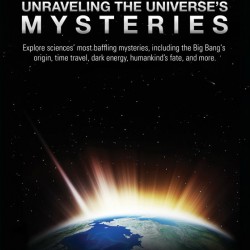
A dramatic view of Earth from space with the sun rising behind it, symbolizing cosmic mysteries and the universe's origin.

The Universe’s Unsolved Mysteries – Part 2/2 (Conclusion)

This is from the Introduction section of my book, Unraveling the Universe’s Mysteries. Enjoy!

The Twentieth Century stands as the golden age of science, yielding more scientific breakthroughs than any previous century. Yet, in the wake of all the scientific breakthroughs over the last century, profound mysteries emerged. To my eye, there appears a direct correlation between scientific discoveries and scientific mysteries. Often, it appears that every significant scientific breakthrough results in an equally profound mystery. I have termed this irony of scientific discovery the Del Monte Paradox, namely:

Each significant scientific discovery results in at least one profound scientific mystery.

I’ll use two examples to illustrate this paradox. For our first example, consider the discovery of the Big Bang theory. We will discuss the Big Bang theory in later chapters. For this discussion, please view it as a scientific framework of how the universe evolved. While the scientific community generally accepts the Big Bang theory, it is widely acknowledged that it does not explain the origin of the energy that was required to create the universe. Therefore, the discovery of the Big Bang theory left science with a profound mystery. Where did the energy originate to create a Big Bang? This is arguably the greatest mystery in science, and currently an area of high scientific focus. For the second example, consider the discovery we discussed above—the universe’s expansion is accelerating. This leaves us with another profound mystery. What is causing the universe’s expansion to accelerate? Numerous theories float within the scientific community to explain these mysteries. None has scientific consensus.

This book will investigate and provide insight on some of science’s greatest mysteries. Although there are numerous scientific mysteries, we will concentrate on three main “classes” of mysteries by section:

Section I: What Caused the Big Bang?

Section II: What Mysteries Still Baffle Modern Science?

Section III: Are We Alone?

All are highly active areas of scientific research, and bring us to the edge of scientific knowledge. All influence the direction scientific research is taking. One scientific breakthrough on any one of these mysteries could literally change the world of science.

The scientific community is not in complete consensus with numerous theories forwarded to address the mysteries. This is how it should be, since the theories reside on the edge of scientific knowledge. In a way, this is a righteous thing. Science moves forward via rigorous debate, experimentation, and independent validation of scientific findings and theories. All significant scientific theories have gone through this process. This is the scientific method. Remember that Einstein’s special theory of relativity, published in 1905, took about 15 years to gain acceptance by the majority of the scientific community (circa 1920). Here I’ll dispel a commonly held belief about Einstein. Most people have heard of Albert Einstein. They consider him one of the greatest scientists that ever lived. They believe that he jotted down equations, and created new theories, while working separate from the rest of the scientific community. This view of Einstein quietly working at his desk and dreaming up theories and equations is completely erroneous. Nothing could be further from the truth. Einstein let the experiments and observations of the scientific community guide his theoretical work. He cared deeply about the acceptance of his theories. In fact, in 1919, three years after publishing his general theory of relativity, he stated, “By an application of the theory of relativity to the taste of readers, today in Germany I am called a German man of science, and in England I am represented as a Swiss Jew. If I come to be regarded as a bête noire (black beast or a person strongly detested) the descriptions will be reversed, and I shall become a Swiss Jew for the Germans and a German man of science for the English!”

Einstein can rest in peace. Science holds the special theory of relativity as the golden standard, having withstood the rigor of over 100 years of scientific investigation. Elements of the general theory of relativity have also withstood vigorous investigation. To that point, scientists believe that other theories, such as string theory and dark energy, which we discuss in later chapters, needs to meet the same standards of scrutiny before they too can become scientific fact.

Scientific mysteries are intriguing. Almost everyone loves a good mystery. Unlike fiction, these mysteries are real. Their reality is wondrous and sometimes scary. This book will “unravel” each mystery by presenting the currently held scientific theories to explain the observed phenomena. However, in the absence of a viable scientific explanation, when possible I will propose an explanation based on original research. Regardless of the origin of the explanations, please understand, we are on the edge of science where scientific proof is elusive, and scientific consensus is rare. Therefore, consider all such theories with an open, but cautious mind. Nobel Laureate Max Born said, “I am now convinced that theoretical physics is actually philosophy.” Therefore, often the explanation will read like metaphysics or even science fiction. This is how life is on the edge of science, where mysteries abound.