Tag Archives: louis del monte

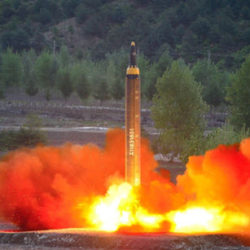
A missile launching from the ground with bright flames and smoke at the base, surrounded by trees and hills.

Special Counsel Investigating Alleged Russian Interference in the 2016 Election Injects “Distraction Effect”

The media is devoting 24/7 coverage to the Justice Department’s appointment of a special counsel, former FBI director Robert S. Mueller, to investigate alleged Russian interference in the 2016 election. While that move has garnered bipartisan support, there has been little to no thought given to the “distraction effect” it will have on the government, especially the president.

The distraction effect states, “Attending to the new task increases the risk of an error with one or both of the tasks because the stress of the distraction or interruption causes cognitive fatigue, which leads to omissions, mental slips or lapses, and mistakes.”

In simple terms, the current political turmoil is likely to result in mistakes by those distracted, which right now includes President Trump, his administration, and the US Congress. At this point, the integrity of Special Counsel Robert S. Mueller is not the issue. President Trump and his administration’s potential collusion with Russia in the 2016 election is not the issue. The issue is the investigation itself, which is likely to fuel a major distraction. Expect lines drawn and sides taken. Expect a 24/7 media bombardment. Bad news sells. Breaking bad news sells even more.

It is the equivalent of driving and texting at the same time, a proven recipe for disaster. Unfortunately, in this case, we are delicately balancing on a knife’s edge, with North Korea close to having nuclear tipped missiles capable of striking the United States, China’s mutual protection treaty with North Korea, and a US super-carrier strike force in the region. One misstep could be disastrous.

The potential for a misstep is high. A defiant North Korea continues to fire missiles into Sea of Japan, when successful. It appears North Korea destroyed one recent missile in route toward Russia. What will happen if North Korea fires a missile intended for the Sea of Japan, but makes a miscalculation and strikes Japan? The United States and Japan have a bilateral security treaty, which obligates the US and Japan to cooperate in defense. There are numerous scenarios, but the likelihood in even a short limited conflict is a million dead.

The reality is any counter attack by the United States in Japan or South Korea’s defense will leave a million dead in a matter of hours. It is unlikely the US will use nuclear weapons unless North Korea uses them first. Even with that provocation, the proximity of South Korea to North Korea makes it difficult for the US to use nuclear weapons without endangering South Korea.

North Korea has most of its artillery and rockets in hardened bunkers close to the demilitarized zone. In the first hours of any conflict, North Korea will strike Soul (population 10,000,000). It may even launch biological and nuclear weapons at South Korea, Japan, and US forces in the region. The THAAD (Terminal High Altitude Area Defense) weapon system, installed by the US in South Korea to destroy North Korean missiles in flight, is untested in combat.

China currently appears to be the voice of reason, calling for restraint. However, will China honor its mutual protection treaty with North Korea in the event of a conflict? If it does, the conflict could ignite a large theater conflict, similar to World War II. It is unlikely, since China has more to gain by being a friendly trading partner with the US than an adversary, but we do not know how things may play out in the event of a war with North Korea.

The stakes are high. The last thing we need is what we now have, a major distraction in the form of a special counsel. The probability of a misstep is now exponentially increased. The current circumstances may embolden North Korea to further its mission to dominate the Asian region, which means more missile and nuclear weapons tests. Will the US be able to act rationally and proportionately? Given the “distraction effect,” what do you think?
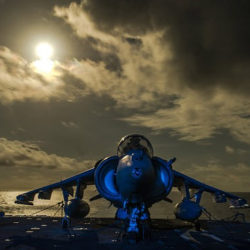

A blue fighter jet on a carrier deck under a dramatic cloudy sky with the sun partially visible.

North Korea Blames US for Hostile Tensions – Pyongyang Vows Response

The Korean Central News Agency released a commentary Friday titled, “Who Is Chiefly to Blame for Plagued Situation on Korean Peninsula,” in which blames the US with bringing the region to the brink of nuclear war. It also vows to continue its preparations for a nuclear war.

A nuclear war between the US and North Korea would be a worldwide nightmare, which could open the door to a larger theater conflict with China and Russia. Even if the US refrains from using nuclear weapons, analysts project that a war between North Korea and the United States, along with its allies, could take months to conclude. In those months, North Korea is likely to respond in a number of ways. To understand their potential responses, we need to examine their military capabilities.

Nuclear Weapons and Missiles  

North Korea has between 13-21 nuclear weapons, similar to the atom bombs dropped on Hiroshima and Nagasaki at the end of World War II. In other words, their nuclear weapons are physically large, unlikely to fit on a missile, and measured in kilotons of TNT, not megatons like those of the United States and Russia. Nonetheless, US nuclear weapons during World War II killed 250,000 Japanese. Therefore, if they find any way to deliver their nuclear weapons, millions could die.

One way that North Korea may attempt to deliver its nuclear weapons is by ballistic missiles. North Korea’s missile arsenal includes artillery rockets, derived from World War II designs, to medium-range missiles, of questionable reliability, able to strike targets in the Pacific Ocean. While this appears relatively crude by US military standards, it still presents a threat to the Asian region, even if the missiles only use conventional explosives. Some analysts suggest that North Korea may be intentionally making small atomic bombs, similar to the tactical nuclear weapons of the United States and Russia, to enable deployment in their medium range missiles. Tactical nuclear weapons have a multi-kiloton punch that could devastate cities like Seoul and Tokyo, killing millions.

In 2012, North Korea began parading its intercontinental ballistic missiles, the KN-08 and KN-14, carried and launched by specifically built truck. The missiles are in the early development stage and analysts question if North Korea has the capability to target them accurately. However, there is little doubt that North Korea is focusing on building reliable long-range missiles with the capability to reach the mainland United States.

A second way North Korea could deliver its nuclear weapons is by smuggling them out of North Korea in containers on cargo ships. Using this method, North Korea could inflict serious damage and casualties to ports anywhere in the world. Crime syndicates currently use shipping containers to smuggle narcotics, weapons, stolen property, and humans to countries around the world. With over 17 million shipping containers in circulation, it would be hard to detect those that contain a nuclear weapon, especially if the detonation occurs while the container is still aboard the ship.

Military and Conventional Weapons

North Korea has the world’s largest army, the Korean People’s Army (KPA) with 1,106,000 active and 8,389,000 reserve troops, including the world’s largest Special Forces unit. In short, almost every able-bodied male has extensive military training.

However, beyond the military training, a former defector claims that every North Korean soldier spends 60% of their time exposed to a form of “brainwashing.” Most North Koreans join the KPA when are 17 to 18 years old and serve a mandatory 10 years if they are male, 6 years if they are female. At that age, they are highly impressionable and just beginning to form their values and opinions of the world. North Korea tightly controls all communications and they learn protecting their leader, Kim Jung-un, is their sacred duty, and they must obey all commands. This suggests that any invasion of North Korea will meet staunch resistance and may degrade into guerrilla warfare.

North Korea’s diverse conventional weapons arsenal includes approximately 3,700 tanks, 2,100 armored personnel carriers and infantry fighting vehicles, 17,900 artillery pieces, 11,000 anti-aircraft guns, 10,000 shoulder-launched surface-to-air missiles and anti-tank guided missiles, 1,600 fighter aircraft, and 1,000 warships, among them 70 submarines, making it the world’s largest submarine fleet.

Given the sheer numbers of their conventional weapons, even a preemptive strike would be unlikely to destroy North Korea’s entire capability. Inevitably, they would strike back. South Korea, Japan, and US forces in the region would be their high priority targets. Since Soul, the capital of South Korea, and its 24 million inhabitants, is less than 40 miles south of the North Korean border, even conventional artillery and rockets have the potential to kill millions.

Asymmetrical Weapons

In 2014, the South Korean Defense Ministry estimated that North had stockpiled 2,500 to 5,000 tons of chemical weapons and had a capacity to produce a variety of biological weapons.

North Korea’s tons of chemical weapons include nerve, blister, blood, and vomiting agents, as well as some biological weapons, including anthrax, smallpox, and cholera. North Korea could deliver the chemical and biological weapons via artillery and missiles. They have missiles capable of reaching targets in South Korea and Japan.

It is also possible that North Korea has already smuggled biological weapons into the countries they consider adversarial. Given the “brainwashing” of their soldiers, North Korea could launch “kamikaze” style attacks, sending infected agents to mingle with the adversary’s populace.

North Korea is a signatory to the Geneva Protocol, which prohibits the use of chemical weapons in warfare, and to the Biological and Toxins Weapons Convention (BTWC), which prohibits the development, production and stockpiling of bacteriological (biological) and toxin weapons. However, there is already evidence they will not adhere to either treaty. For example, evidence suggests North Korea is responsible for the assassination of Kim Jong-un’s half-brother Kim Jong-nam, who was critical of Kim Jong-un’s regime. Authorities allege that North Korean agents sprayed VX nerve agent in Kim Jong-nam’s face, causing his death.

The Geneva Conventions, which establish the standards of international law for humanitarian treatment in war, does not cover nanoweapons. In my book, Nanoweapons: A Growing Threat To Humanity (Potomac Books 2017), I made the observation that China’s offensive nanoweapons capabilities may benefit from their alliance with North Korea and vice versa. Therefore, North Korea could deploy the simplest of nanoweapons, such as toxic nanoparticles, which mimic chemical weapons, and still be within the standards of international law.

Conclusions

Any conflict with North Korea is likely to trigger them to use all weapons at their disposal. Such a conflict would leave a million dead.

Efforts to unify the North and South would face extreme ideological barriers. All communication in the North vilifies its adversaries and raises Kim Jung-un to the level of a deity.

Any war with North Korea may open the door to a wider conflict. The Sino-North Korean Mutual Aid and Cooperation Friendship Treaty bind China and North Korea, which includes provisions for either country to come to the aid of the other in the event of an attack.


A scientist closely examining a sample through a microscope in a laboratory setting.

North Korea Accuses US/South Korea of ‘Nano Poison’ Plot to Kill Kim Jong Un

In a 1,800-word report Friday (May 5, 2017), which offered no evidence, the North Korean state news agency KCNA said a “terrorist group” conspired with the CIA and South Korea’s Intelligence Service (IS) to assassinate its leader Kim Jong Un using a “biochemical substances including radioactive substance and nano poisonous substance.”

This is the second time the United States has been accused of using a nanoweapon to kill a head of state. Pravda, Russia’s state run newspaper ran this headline on June 6, 2016: “US nano weapon killed Venezuela’s Hugo Chavez, scientists say.”

Obviously, nanoweapons (also spelled nano weapons) are beginning to become part of the international vocabulary. Unfortunately, most in the US have never heard of nanotechnology, let alone nanoweapons. Therefore, let us define terms.

According to the United States National Nanotechnology Initiative’s website, nano.gov, “Nanotechnology is science, engineering, and technology conducted at the nanoscale, which is about 1 to 100 nanometers.” To put this in simple terms, the diameter of a typical human hair equals 100,000 nanometers. Therefore, the largest nanotechnology has a dimension that is over a thousand times smaller than the diameter of a human hair. This means nanotechnology is invisible to the naked eye or even under an optical microscope.

Nanoweapons are any military technology that exploits the power of nanotechnology. To be clear, the weapon itself may be large, but as long as it has one or more components in the nanoscale, it is a nanoweapon.

You may wonder, Why would someone use nano poisons? The size of nanoparticles, the components of a nano poison, allows living tissue to absorb them more readily than other known toxins. Nanoparticles are able to cross biological membranes and access cells, tissues and organs that their larger counterparts cannot. Therefore, nano poisons are more deadly than their bulk counterparts are.

Currently, the United States, China, and Russia are in a frantic nanoweapons arms race. Each country is spending billions of dollars, as they vie for an asymmetrical advantage in nanoweapons. However, each country is keeping its thrusts in nanoweapons secret. For example, in 2000, the United States government launched the National Nanotechnology Initiative (NNI), a research and development initiative involving the nanotechnology-related activities of 25 Federal agencies with a range of research and regulatory roles and responsibilities. To date, the US has invested over $20 billion in NNI programs. If you review the NNI website, nano.gov, you will not find the word nanoweapons. However, NNI’s dedicates 15-20% of its budget to DOD programs. In addition, each branch of the US military has its own nanotechnology R&D facility.

While the front-runners in the nanoweapons arms race are the US, China, and Russia, many other nations, even impoverished countries like North Korea, are also taking part. Nanowek.com, the leading nanotechnology portal about nanotechnologies, reports, “All major powers are making efforts to research and develop nanotechnology-based materials and systems for military use.”

You may ask, What fuels the nanoweapons arms race? A new paradigm fuels this race, namely the superpowers of the future will be those nations with the most capable nanoweapons. Five facts support this assertion.

  1. Unlike nuclear, chemical, and biological weapons, no international treaties limit the development and deployment of nanoweapons or their use in warfare
  2. Nanoweapons, for example toxic nanoparticles, have the potential to be weapons of mass destruction
  3. Developing nanoweapons is less costly than developing nuclear weapons
  4. Detecting nanoweapons manufacturing facilities is difficult
  5. Detecting the source of a nanoweapons attack is difficult

This suggests the nanoweapons arms race is more problematic than the nuclear arms race. In fact, in my book, Nanoweapons: A Growing Threat To Humanity, I pose a critical question: Will it be possible to develop, deploy and use nanoweapons in warfare, without rendering humanity extinct?

In 2008, experts surveyed at the Global Catastrophic Risk Conference at the University of Oxford cited molecular nanotechnology weapons as having a 5% probability of rendering humanity extinct by the end of this century. By comparison, they rated nuclear war as having a 4% probability. It is natural to wonder, What is it about nanoweapons that makes them even more problematic than nuclear weapons? The simple answer is “control.” Controlling nanoweapons is as problematic as controlling biological weapons.

Let’s illustrate the control issue with a simple example. In the third quarter of the 21st century, self-replicating nanobots, nearly invisible robots able to replicate themselves, will dominate the nanoweapons arsenals of the most capable countries. These self-replicating nanobots will be programmable, among other functions, to attack the populace of another country, via the DNA similarities of the populace. However, what if there is a programming glitch. The self-replicating nanobots could become the equivalent of a biological plague and begin killing all humans indiscriminately.

Nanotechnology is an enabling technology. It enables a trillion dollar worldwide market in commercial products. It also enables nanoweapons, which are being deployed now in the form of integrated circuits that guide missiles, lasers capable of “shooting” down a cruise missile, nano-enhanced explosives with ten time the punch of conventional explosives, to name a few.

Given the potential of nanoweapons to become the ultimate weapons of mass destruction, we need the United Nations and its member countries to enact measures to assure that nanoweapons do not become our final invention.


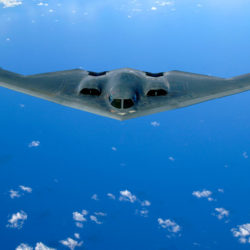
A B-2 Spirit stealth bomber flying over a blue sky with scattered clouds below.

North Korea’s “Super-mighty pre-emptive strike” – More Likely to Come from US after Pence Leaves Region

It would be unwise for the United States to preemptively attack North Korea while Vice President Pence is in the Asian region. It would also be suicidal for North Korea to attack any target that would potentially harm Pence. But, when Pence completes his 10 day Asian trip, all elements of a US preemptive strike against North Korea will be in place, namely:

  • Pence will have met with all major stakeholders in the region, including South Korea, Japan, and China, and likely appraised them of US intentions, in an effort to avoid miscommunications if hostilities start
  • Coupled with Pence’s Asian trip, the US will have sent a clear message that it will use its military force when it deems necessary, namely
    • The US Cruise missile attack on Syria’s Shayrat air base, suspected of being the launch site of Syria’s chemical weapons attack
    • The US’s use of the GBU-43/B Massive Ordnance Air Blast (MOAB)  against ISIS’s system of tunnels and caves in Afghanistan’s eastern Nangarhar Province
  • The US antiballistic defense system, Terminal High Altitude Area Defense system (Thaad), deployed in South Korea, will be fully operational
  • The US will have two aircraft carrier strike groups in the region, the USS Ronald Reagan, currently at the Yokosuka Naval Base in Japan, and the Carl Vinson, considered to be the US’s top supercarrier
  • A squadron of Whiteman Air Force Base (in Missouri) B-2 stealth bombers, each loaded with two of the US’s largest bunker buster bombs, the 15-ton GBU-57A/B Massive Ordnance Penetrator (MOP), will be ready to strike North Korea’s most hardened bunkers

While the news media has given significant coverage of Pence’s Asian trip, the US’s recent use of military force, the deployment of the Thaad missile defense system, and the aircraft striker groups, little has been discussed about B-2 bombers, each able to accommodate a payload of two MOPs. The B-2s have a range of slightly over 6,000 miles. With refueling in flight, the B-2s would be capable of striking North Korea in a round trip from Whiteman Air Force Base.

While recent news coverage of the US MOAB has correctly labeled it the “largest non-nuclear bomb” in the US arsenal, most did not emphasize the MOAB is not a bunker buster. So let’s understand the difference between the MOAB and the MOP.

The Pentagon developed the MOAB for use as an anti-personnel weapon, not as a bunker buster. In fact, the MOAB has a light 2,900 pound aluminum casing surrounding its 9 ton payload and is primarily an air burst munition. As mentioned in my previous Huff Post April 17, 2017 article, “United States ‘Mother Of All Bombs’ And Other Nanoweapons,” the MOAB likely achieves its 11 ton equivalent TNT blast via the use of nanoaluminum. As defined in my book, Nanoweapons: A Growing Threat to Humanity (Potomac 2017), “Nanoweapons are any military technology that exploits the power of nanotechnology.” This means even the largest munition, such as the MOAB, is a nanoweapon if it uses nanotechnology.

In sharp contrast, the MOP is a 15-ton earth/concrete-penetrating weapon, with a classified payload specially developed by the Defense Threat Reduction Agency to destroy weapons of mass destruction. I judge the MOP payload also uses a nano-enhanced explosive payload. This is speculation, but considering the military’s decade long experimentation with nano-accelerants to boost conventional explosives, the dots appear to connect.

With the above understanding, it is clear that the first elements of US preemptive strike against North Korea would involve B-2 bombers hammering hardened bunkers thought to be housing nuclear tipped ballistic missiles. Concurringly, the US would also use:

  • Ticonderoga-class guided-missile cruisers, like the USS Lake Champlain in the Carl Vinson supercarrier group, to launch Tomahawk cruise missiles to strike strategic or tactical targets, especially anti-aircraft missile launch sites
  • Carrier launched fighter aircraft to attack North Korean artillery and rocket launchers, once anti-aircraft missile sites have been destroyed
  • Thadd to counter any North Korean attempt to launch its ballistic missiles hidden in its vast mountainous forests
  • US attack submarines to destroy North Korean submarines and warships

The US goal of a preemptive strike would be to prevent North Korea from launching attacks, using artillery and missiles tipped with nuclear, chemical, or conventional warheads, against South Korea, Japan, other targets in the Pacific, including potentially Hawaii and US warships.

Will a US preemptive strike prevent North Korea from launching a counter attack? The answer is probably not completely, considering North Korea has up to 15,000 cannons and missile launchers in hardened bunkers.

A US preemptive strike is almost certain to result in some allied civilian, military, and US casualties. The question is how much, but US intelligence agencies are not providing estimates.

No matter how you view the North Korean problem, it is a nightmare. Even with a relatively successful US preemptive strike, What is the next move? China has about 150,000 troops stationed on the China Korean border. Will they invade North Korea? Will the US invade North Korea? Again, US intelligence agencies are not providing answers.

We know that we cannot allow North Korea to obtain strategic nuclear weapons capable of hitting targets in the US. It is possible that Pence’s visit to the region is to set the stage for a US preemptive strike, by via strategic understandings with South Korea, China and Japan. The US would likely see China as more stable occupying force in North Korea than Kim Jong-un’s regime. President Trump has made it clear to Chinese President Xi Jinping that China’s help in resolving the North Korean problem would lead to a more favorable trade deal with the United States.

When Pence returns to the United States, what he reports to the president is likely to determine the next US move.

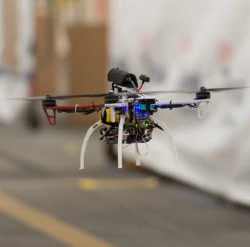
A close-up of a small quadcopter drone hovering indoors with visible wiring and components.

Will Nanoweapons of Mass Destruction (NMD) Be Our Final Invention?

You may never have heard of nanoweapons. Recent polls indicate that most people in the United States do not know about nanotechnology, let alone nanoweapons. Therefore, let us start at the beginning.

According to the United States National Nanotechnology Initiative’s website, nano.gov, “Nanotechnology is science, engineering, and technology conducted at the nanoscale, which is about 1 to 100 nanometers.” The diameter of a typical human hair is about 100,000 nanometers. This means we are dealing with technology that is invisible to the naked eye or even under an optical microscope. This may suggest that nanotechnology products are rare. Nothing could be further from the truth. Numerous companies are producing commercial nanotechnology products, from cosmetics to integrated circuit microprocessors. Nanomedicine (i.e., medical nanotechnology) is using T-cell nanobots, tiny robots at the nanoscale, in medical trials to cure over eighty percent of terminally ill cancer patients. Factually, you may not have heard about nanotechnology, but you are likely using a product that incorporates it. Some estimates place the worldwide market for nanotechnology products at over $1 trillion in 2015 and estimated to grow to $3 trillion by 2020.

Nanoweapons are any military technology that exploits the power of nanotechnology. Let me provide an example. In 2007, the Russian military successfully tested the world’s most powerful non-nuclear air-delivered bomb, nicknamed the “father of all bombs.” Even though it only carries about 7 tons of explosives compared with more than 8 tons of explosives carried by the United States Massive Ordnance Air Blast bomb, the Russian bomb is four times more powerful. The Russians do not explain how they achieve the more destructive bomb. However, most likely they are using nanometals, such as nanoaluminum, as a catalyst to create explosives more powerful than conventional explosives. As powerful as the Russian bomb is, it still pales in comparison to nuclear weapons. Given the title of this article, you may wonder if I am being an alarmist. Let me share some information with you.

Let us start with some facts. The typical events most people consider probable to cause humanity’s extinction, such as a large asteroid or a super-volcanic eruption, have a low probability of occurrence, about 1 in 50,000. Ironically, one of the most probable events likely to cause human extinction is seldom in the media or addressed by world governments, namely molecular nanotechnology weapons (i.e., nanoweapons). In 2008, experts surveyed at the Global Catastrophic Risk Conference at the University of Oxford predicted that nanoweapons have a 1 in 20 (i.e., 5%) probability of causing human extinction by the year 2100.

Are these experts right? Unfortunately, all the evidence to date suggests they are. For example, consider the simplest of all nanoweapons, toxic nanoparticles. The United States, Russia, and China know how to make toxic nanoparticles in quantities sufficient to cripple an adversary’s populace. A populace exposed to toxic nanoparticles may experience serious illnesses, including death. In sufficient quantity, toxic nanoparticles could wipe out New York City, Beijing, or Moscow, which qualifies them as nanoweapons of mass destruction (NMD). Delivery to the target populace could be as simple as introducing it into the city’s reservoirs. Even a single individual may become the target. A recent 2016 headline in Pravda, Russia’s state run newspaper, reads, “US nano weapon killed Venezuela’s Hugo Chavez, scientists say.” The Venezuelan scientists mentioned in the article attributed Hugo Chavez’s death to toxic nanoparticles that cause cancer, but no data in the public domain substantiates their claim. However, the assertion itself indicates an awareness of toxic nanoparticles and their potential lethality.

What makes nanoweapons more problematic than nuclear weapons is our potential to lose control over them. For example, consider a nanobot that mimics an innocuous fly. It could be a surveillance or lethal nanoweapon. This may sound like science fiction, but it is not. On Dec. 16, 2014, the United States Army Research Laboratory announced development of a fly drone weighing only a small fraction of a gram. Using DARPA’s Fast Lightweight Autonomy (FLA) program, which allows small drones to enter buildings and avoid crashing into objects, the fly drone could spy on an adversary from within the adversary’s operations center. This gives a completely new meaning to “fly on the wall.” Alternately, it could deposit a small, but lethal amount of toxin in the adversary’s food or water. The most lethal toxin known is botulism H. As little as 100 nanograms of botulism H is lethal to humans, who would be unable to smell, taste, or see that amount of toxin. Imagine 50 million fly drones, each able to deliver a lethal toxin. In that quantity, the fly drones become nanoweapons of mass destruction. However, a quantity of that size raises a question, How do we control these nanoweapons of mass destruction? If we lost control, the fly drones could spread beyond the adversary’s boarder and begin killing indiscriminately. It becomes the technological equivalent of a bioweapon, but does not fall under the Geneva Protocol.

It may be hard to believe, but nanoweapons of mass destruction are moving from science fiction to science fact. This brings us back to the title of the post, Will Nanoweapons of Mass Destruction (NMD) Be Our Final Invention?