Category Archives: Technology

Close-up of a glowing microchip on a dark blue circuit board, highlighting intricate electronic components.

Moore’s Law As It Applies to Artificial Intelligence – Part 1/2

Intel cofounder Gordon E. Moore was the first to note a peculiar trend, namely that the number of components in integrated circuits had doubled every year from the 1958 invention of the integrated circuit until 1965. In Moore’s own words:

The complexity for minimum component costs has increased at a rate of roughly a factor of two per year.…Certainly over the short term this rate can be expected to continue, if not to increase. Over the longer term, the rate of increase is a bit more uncertain, although there is no reason to believe it will not remain nearly constant for at least 10 years. That means by 1975, the number of components per integrated circuit for minimum cost will be 65,000. I believe that such a large circuit can be built on a single wafer. (Gordon E. Moore, “Cramming More Components onto Integrated Circuits,” Electronics magazine, 1965)

 In 1970 Caltech professor, VLSI pioneer, and entrepreneur Carver Mead coined the term “Moore’s law,” referring to a statement made by Gordon E. Moore, and the phrase caught on within the scientific community.

In 1975 Moore revised his prediction regarding the number of components in integrated circuits doubling every year to doubling every two years. Intel executive David House noted that Moore’s latest prediction would cause computer performance to double every eighteen months, due to the combination of not only more transistors but also the transistors themselves becoming faster.

From the above discussion, it is obvious that Moore’s law has been stated a number of ways and has changed over time. In the strict sense, it is not a physical law but more of an observation and guideline for planning. In fact many semiconductor companies use Moore’s law to plan their long-term product offerings. There is a deeply held belief in the semiconductor industry that adhering to Moore’s law is required to remain competitive. In this sense it has become a self-fulfilling prophecy. For our purposes in understanding AI, let us address the following question.

What Is Moore’s law?

As it applies to AI, we will define Moore’s law as follows: The data density of an integrated circuit and the associated computer performance will cost-effectively double every eighteen months. If we consider eighteen months to represent a technology generation, this means every eighteen months we receive double the data density and associated computer performance at approximately the same cost as the previous generation. Most experts, including Moore, expect Moore’s law to hold for at least another two decades, but this is debatable, as I discuss later in the chapter. Below is a graphical depiction (courtesy of Wikimedia Commons) of Moore’s law, illustrating transistor counts for integrated circuits plotted against their dates of introduction (1971–2011).

As previously mentioned, Moore’s law is not a physical law of science. Rather it may be considered a trend or a general rule. This begs the following question. How Long Will Moore’s Law Hold? We will address this and other questions in part 2 of this post.

Source: The Artificial Intelligence Revolution (2014), Louis A. Del Monte
Digital illustration of a human head with glowing neural connections representing brain activity and intelligence.

Will Strong Artificially Intelligent Machines Become Self-Conscious? Part 2/2 (Conclusion)

Part 1 of  this post ended with an important question: “How can we determine whether an intelligent machine has become conscious (self-aware)?” We will address this question in this post, along with some  ethical dilemmas.

We do not have a way yet to determine whether even another human is self-aware. I only know that I am self-aware. I assume that since we share the same physiology, including similar human brains, you are probably self-aware as well. However, even if we discuss various topics, and I conclude that your intelligence is equal to mine, I still cannot prove you are self-aware. Only you know whether you are self-aware.

The problem becomes even more difficult when dealing with an intelligent machine. The gold standard for an intelligent machine’s being equal to the human mind is the Turing test, which I discuss in chapter 5 of my book, The Artificial Intelligence Revolution. (If you are not familiar with the Turing test, a simple Google search will provide numerous sources to learn about it.) As of today no intelligent machine can pass the Turing test unless its interactions are restricted to a specific topic, such as chess. However, even if an intelligent machine does pass the Turing test and exhibits strong AI, how can we be sure it is self-aware? Intelligence may be a necessary condition for self-awareness, but it may not be sufficient. The machine may be able to emulate consciousness to the point that we conclude it must be self-aware, but that does not equal proof.

Even though other tests, such as the ConsScale test, have been proposed to determine machine consciousness, we still come up short. The ConsScale test evaluates the presence of features inspired by biological systems, such as social behavior. It also measures the cognitive development of an intelligent machine. This is based on the assumption that intelligence and consciousness are strongly related. The community of AI researchers, however, does not universally accept the ConsScale test as proof of consciousness. In the final analysis, I believe most AI researchers agree on only two points:

  1. There is no widely accepted empirical definition of consciousness (self-awareness).
  2. A test to determine the presence of consciousness (self-awareness) may be impossible, even if the subject being tested is a human being.

The above two points, however, do not rule out the possibility of intelligent machines becoming conscious and self-aware. They merely make the point that it will be extremely difficult to prove consciousness and self-awareness.

Ray Kurzweil predicts that by 2029 reverse engineering of the human brain will be completed, and nonbiological intelligence will combine the subtlety and pattern-recognition strength of human intelligence with the speed, memory, and knowledge sharing of machine intelligence (The Age of Spiritual Machines, 1999). I interpret this to mean that all aspects of the human brain will be replicated in an intelligent machine, including artificial consciousness. At this point intelligent machines either will become self-aware or emulate self-awareness to the point that they are indistinguishable from their human counterparts.

Self-aware intelligent machines being equivalent to human minds presents humankind with two serious ethical dilemmas.

  1. Should self-aware machines be considered a new life-form?
  2. Should self-aware machines have “machine rights” similar to human rights?

Since a self-aware intelligent machine that is equivalent to a human mind is still a theoretical subject, the ethics addressing the above two questions have not been discussed or developed to any great extent. Kurzweil, however, predicts that self-aware intelligent machines on par with or exceeding the human mind eventually will obtain legal rights by the end of the twenty-first century. Perhaps, he is correct, but I think we need to be extremely careful regarding what legal rights self-aware intelligent machines are granted. If they are given rights on par with humans, we may have situation where the machines become the dominant species on this planet and pose a potential threat to humankind. More about this in upcoming posts.

Source: The Artificial Intelligence Revolution (2014), Louis A. Del Monte

A stylized blue and white vintage microphone with musical notes in the background.

“The Artificial Intelligence Revolution” Interview Featured On Blog Talk Radio

My interview on Johnny Tan’s program (From My Mama’s Kitchen®) is featured as one of “Today’s Best” on Blog Talk Radio’s home page. This is a great honor. Below is the player from our interview. It displays a slide show of my picture as well as the book cover while it plays the interview.

Discover Moms and Family Internet Radio with FMMK Talk Radio on BlogTalkRadio
A humanoid robot with an extended hand under the text 'The Artificial Intelligence Revolution' questioning AI's role in serving or replacing humans.

Louis Del Monte FMMK Talk Radio Interview on The Artificial Intelligence Revolution

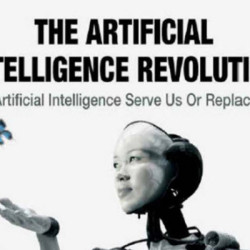
You can listen and/or download my interview with Johnny Tan of FMMK talk radio discussing my new book, The Artificial Intelligence Revolution. We discuss and explore the potential benefits and threats strong artificially intelligent machines pose to humankind.

Click here to listen or download the interview “The Artificial Intelligence Revolution”

Digital illustration of a human head with glowing neural connections representing brain activity and intelligence.

Will Strong Artificially Intelligent Machines Become Self-Conscious? Part 1/2

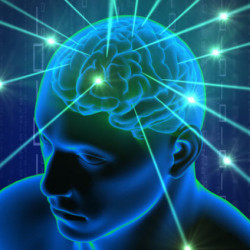
A generally accepted definition is that a person is conscious if that person is aware of his or her surroundings. If you are self-aware, it means you are self-conscious. In other words you are aware of yourself as an individual or of your own being, actions, and thoughts. To understand this concept, let us start by exploring how the human brain processes consciousness. To the best of our current understanding, no one part of the brain is responsible for consciousness. In fact neuroscience (the scientific study of the nervous system) hypothesizes that consciousness is the result of the interoperation of various parts of the brain called “neural correlates of consciousness” (NCC). This idea suggests that at this time we do not completely understand how the human brain processes consciousness or becomes self-aware.

Is it possible for a machine to be self-conscious? Obviously, since we do not completely understand how the human brain processes consciousness to become self-aware, it is difficult to definitively argue that a machine can become self-conscious or obtain what is termed “artificial consciousness” (AC). This is why AI experts differ on this subject. Some AI experts (proponents) argue it is possible to build a machine with AC that emulates the interoperation (i.e., it works like the human brain) of the NCC. Opponents argue that it is not possible because we do not fully understand the NCC. To my mind they are both correct. It is not possible today to build a machine with a level of AC that emulates the self-consciousness of the human brain. However, I believe that in the future we will understand the human brain’s NCC interoperation and build a machine that emulates it. Nevertheless this topic is hotly debated.

Opponents argue that many physical differences exist between natural, organic systems and artificially constructed (e.g., computer) systems that preclude AC. The most vocal critic who holds this view is American philosopher Ned Block (1942– ), who argues that a system with the same functional states as a human is not necessarily conscious.

The most vocal proponent who argues that AC is plausible is Australian philosopher David Chalmers (1966– ). In his unpublished 1993 manuscript “A Computational Foundation for the Study of Cognition,” Chalmers argues that it is possible for computers to perform the right kinds of computations that would result in a conscious mind. He reasons that computers perform computations that can capture other systems’ abstract causal organization. Mental properties are abstract causal organization. Therefore computers that run the right kind of computations will become conscious.

This is a good place for us to ask an important question: “How can we determine whether an intelligent machine has become conscious (self-aware)?” We will address this question in the next post (Part 2).

Source: The Artificial Intelligence Revolution (2014), Louis A. Del Monte