Category Archives: nanotechnology

human extinction

Will Humanity Survive the 21st Century?

In my last post, I stated, “In making the above predictions [about the singularity], I made one critical assumption. I assumed that humankind would continue the “status quo.” I am ruling out world-altering events, such as large asteroids striking Earth, leading to human extinction, or a nuclear exchange that renders civilization impossible. Is assuming the “status quo” reasonable? We’ll discuss that in the next post.

Let’s now discuss if humanity will survive the 21st century.

The typical events that most people consider as causing humanity’s extinction, such as a large asteroid impact or a volcanic eruption of sufficient magnitude to cause catastrophic climate change, actually have a relatively low probability of occurring, in the order of 1 in 50,000 or less, according to numerous estimates found via a simple Google search. In 2008, experts surveyed at the Global Catastrophic Risk Conference at the University of Oxford suggested a 19% chance of human extinction over the next century, citing the top five most probable to cause human extinction by 2100 as:

  1. Molecular nanotechnology weapons – 5% probability
  2. Super-intelligent AI – 5% probability
  3. Wars – 4% probability
  4. Engineered pandemic – 2% probability
  5. Nuclear war – 1% probability

All other existential events were below 1%. Again, doing a simple Google search may provide different results by different “experts.” If we take the above survey at face value, it would suggest that the risk of an existential event increases with time. This has led me to the conclusion that human survival over the next 30 years is highly probable.

It is interesting to note in the 2008 Global Catastrophic Risk Conference survey, super-intelligent AI equates with molecular nanotechnology weapons for number one. In my view, molecular nanotechnology weapons and super-intelligent AI are two sides of the same coin. In fact, I judge that super-intelligent AI will be instrumental in developing molecular nanotechnology weapons. I also predict that humanity, in some form, will survive until the year 2100. However, I predict that will include both humans with strong artificially intelligent brain implants and organic humans (i.e., no brain implants to enhance their intelligence). However, each may have some artificially intelligent body parts.

Let me summarize. Based on the above information, it is reasonable to judge humanity will survive through the 21st century.

human extinction

Will Humanity Survive The 21st Century?

Examples of typical events that most people think could cause humanity’s extinction are a large asteroid impact or a volcanic eruption of sufficient magnitude to cause catastrophic climate change. Although possible, these events actually have a relatively low probability of occurring, in the order of one in fifty thousand or less, according to numerous estimates found via a simple Google search.

However, there are other events with higher probabilities that may cause human extinction. In 2008, experts surveyed at the Global Catastrophic Risk Conference at the University of Oxford suggested a 19 percent chance of human extinction over this century, citing the top five most probable to cause human extinction by 2100 as:

  1. Molecular nanotechnology weapons (i.e., nanoweapons): 5 percent probability
  2. Superintelligent AI: 5 percent probability
  3. Wars: 4 percent probability
  4. Engineered pandemic: 2 percent probability
  5. Nuclear war: 1 percent probability

All other existential events were below 1 percent. There is a subtle point the survey does not explicitly express, namely, the risk of human extinction increases with time. You may wonder, Why? To answer this question, consider these examples:

  • Nanoweapons and superintelligence become more capable with the development of each successive generation. In the 2008 Global Catastrophic Risk Conference survey, superintelligent AI equates with molecular nanotechnology weapons as the number one potential cause of human extinction. In my view, molecular nanotechnology weapons and superintelligent AI are two sides of the same coin. In fact, I judge that superintelligent AI will be instrumental in developing molecular nanotechnology weapons.
  • In my new book, War At The Speed Of Light, I devoted a chapter on autonomous directed energy weapons. These are weapons that act on their own to take hostile action, resulting in unintended conflicts. Unfortunately, current autonomous weapons don’t embody human judgment. This being the case, wars, including nuclear wars, become more probable as more autonomous weapons are deployed.
  • Lastly, the world is currently facing a coronavirus pandemic. Although most researchers believe this is a naturally occurring pandemic, it still infected 121,382,067 people and caused 2,683,209 deaths to date on a worldwide basis. This suggests the death rate is a little over 2 percent. However, if the virus was more infectious and more deadly, it could render the Earth a barren wasteland. Unfortunately, that is what an engineered pandemic might do.

To my eye, the top five potential causes surfaced by the Global Catastrophic Risk Conference at the University of Oxford in 2008 are all possible, and the probabilities associated with them appear realistic. This means that humanity has a 19 percent chance of not surviving the 21st century on our current course.

In the next post, I will suggest measures humanity can take to increase the probability they will survive into the 22nd century.

Book cover titled 'Nanoweapons: Growing Threat to Humanity' by Louis A. Del Monte, featuring a small insect image.

AUSA Book Review of Nanoweapons: A Growing Threat To Humanity

The Association of the United States Army (AUSA) published this book review (for inclusion in the print version of their magazine). The full review is below and a link to the review is on the AUSA website at this URL: https://www.ausa.org/articles/august-2017-book-reviews

Here is the full review:

Nanoweapons: A Growing Threat to HumanityLouis A. Del Monte. Potomac Books. 244 pages. $29.95

By Scott R. Gourley
Contributing Writer

There are times when a book best serves as the starting point for new discussions or to broaden existing discussions on military technology. Ominous title aside, Nanoweapons: A Growing Threat to Humanity fulfills the role of starting the discussion.

Drawing on three decades of experience as a physicist and business executive leading the development of microelectronics and sensors key to the integrated circuit industry, author Louis A. Del Monte presents a broad look at the emergence of nanotechnology—the science of manipulating materials on an atomic or molecular scale—and the potential implications of “nanoweapons” in future warfare.

In defining the technology, Del Monte offers the criteria used by the U.S. National Nanotechnology Initiative, which calls for only one dimension of the macroscale product to be in the nanoscale of 1 to 100 nanometers.

“This interpretation opens the door for numerous scientific fields to engage in nanotechnology research and application, including the fields of surface science, organic chemistry, molecular biology, semiconductor physics and microfabrication,” he says, noting that the multidisciplinary research category brings with it “unprecedented optimism and serious concerns.”

The concerns in this book are focused on what he asserts to be the weaponization of the technology and specifically the risk of losing control of those weapons.

After combing through the available open-source literature, the author makes projections about the research, the leading countries involved and what some of those research directions might be. Because of the limited amount of information on nanoweapons research he could uncover, the author asserts it is ongoing classified work and then relies on a level of supposition and conjecture to spotlight hypothetical nanoweapon threats like self-replicating smart nanobots, able to build copies of themselves from raw materials and operating in ways similar to biological viruses.

The rough time frame of 2050 is presented as a possibility for when two “technological singularities” may occur—first, a point when artificially intelligent machines exist that exceed the combined cognitive intelligence of humanity, and then a point when the self-replicating smart nanobots will “have completely changed every aspect of human existence” and “have the potential to render humanity extinct.”

While some readers might dismiss the resulting vignettes as a cross between Terminator and Star Trek, the presentations are based on intriguing open-source threads that the author weaves into an interesting fabric based on his experience with the rapid evolution of integrated circuits. Common supporting caveats include: “My insight suggests,” “speculation on my part,” and “based on publicly available information.”

Those looking for hard data on weapons will not find it in this book. In fact, the author’s commercial background results in occasionally confusing statements that overlook current military realities, such as: “Nanoelectronics and nanosensors have the capability to make artillery projectiles ‘smart,’ meaning that they will have properties that resemble guided missiles.”

However, the author’s insight is founded on a broad technology background and does include many thoughtful suggestions on how categories of nanoweapons could be regulated as extensions of existing arms agreements.

The strength of the book is in establishing awareness and either starting or expanding discussions on some of the issues surrounding the potential of nanoweapons. If the author’s 2050 timeline is correct, this issue is not far in the future. That time frame is more than a decade prior to the planned U.S. retirement of its F-35 Joint Strike Fighter and likely a time when the Army will still employ upgraded models of many current combat systems.

Clearly, it’s not too soon to expand some of the discussion on the warfighting implications resulting from nanotechnology.

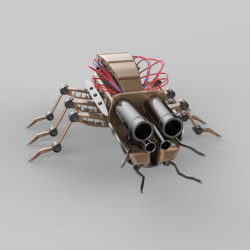
A mechanical insect with metal legs and two large barrel-shaped eyes resembling gun barrels.

Will the United States Use Nanoweapons to Resolve the North Korean Crisis?

Unless you’re working in the field, you probably never heard about U.S. nanoweapons. This is intentional. The United States, as well as Russia and China, are spending billions of dollars per year developing nanoweapons, but all development is secret. Even after Pravda.ru’s June 6, 2016 headline, “US nano weapon killed Venezuela’s Hugo Chavez, scientists say,” the U.S. offered no response. Earlier this year, May 5, 2017, North Korea claimed the CIA plotted to kill Kim Jong Un using a radioactive nano poison, similar to the nanoweapon Venezuelan scientists claim the U.S. used to assassinate former Venezuelan President Hugo Chavez. All major media covered North Korea’s claim. These accusations are substantial, but are they true? Let’s address this question.


Unfortunately, until earlier this year, nanoweapons gleaned little media attention. However, in March 2017 that changed with the publication of my book, Nanoweapons: A Growing Threat to Humanity (2017 Potomac Books), which inspired two articles. On March 9, 2017, American Security Today published “Nanoweapons: A Growing Threat to Humanity – Louis A. Del Monte,” and on March 17, 2017, CNBC published “Mini-nukes and mosquito-like robot weapons being primed for future warfare.” Suddenly, the genie was out of the bottle. The CNBC article became the most popular on their website for two days following its publication and garnered 6.5K shares. Still compared to other classes of military weapons, nanoweapons remain obscure. Factually, most people never even heard the term. If you find this surprising, recall most people never heard of stealth aircraft until their highly publicized use during the first Iraq war in 1990. Today, almost everyone that reads the news knows about stealth aircraft. This may become the case with nanoweapons, but for now, it remains obscure to the public.


Given their relative obscurity, we’ll start by defining nanoweapons. A nanoweapon is any military weapon that exploits the power of nanotechnology. This, of course, begs another question: What is nanotechnology? According to the United States National Nanotechnology Initiative’s website, nano.gov, “Nanotechnology is science, engineering, and technology conducted at the nanoscale, which is about 1 to 100 nanometers.” To put this in simple terms, the diameter of a typical human hair equals 100,000 nanometers. This means nanotechnology is invisible to the naked eye or even under an optical microscope.
If the U.S. chooses to use nanoweapons covertly, they most likely will use:


  • Toxic nanoparticles – These are toxic particles a nanoscale diameter, which means their surface area to volume ratio is enormous. What makes them extremely effective as a poison is that they are able to cross biological membranes that their bulk counterparts are unable to cross. Therefore, they can be readily absorbed. They are more toxic than their due to the large surface area to volume ratio, which allows them to be extremely chemically reactive.


If the U.S. chooses to use nanoweapons in open conflict with North Korea, it will likely be:


  • Nanoelectronic Weapon Systems – Nanoelectronics are integrated circuits with features in the nanoscale. Intel is shipping nanoelectronic microprocessors for use in commercial computer applications. Because of their nanoscale features, they are smaller, faster, and use less power to operate. This makes them ideal for military weapon systems, like guided missiles.


The U.S. has a formidable nanoweapons arsenal. Even as they use them covertly and in open conflict, it may not be apparent that the technology that underpins the weapons is nanotechnology, thus making them by definition nanoweapons.


When will that change? It will change when something big happens. Imagine billions of toxic nanoparticles released on an adversary’s army, causing death and chaos. This would significantly reduce the adversary’s military effectiveness. In all likelihood, it may take weeks or months for the adversary to determine the cause. Imagine millions of nanobots attacking an adversary’s army, again causing death and chaos. In effect, killer insect-like nanobots would be a technological plague.


Ironically, the next big thing in military weapons is small. Barely mentioned in the media, nanoweapons are as effective and lethal as their larger more visible counterparts. In time, a nation’s military might will be a measure of its nanoweapons capabilities, as well as it nuclear and more conventional capabilities. In fact, by the second half of this century, nanoweapon capabilities are likely to determine the superpowers.
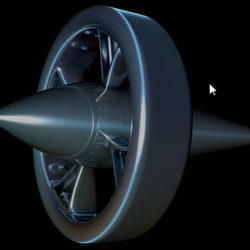
A futuristic, sleek turbine engine with a conical front and illuminated blue accents in a dark setting.

Stephen Hawking Proposes Nanotechnology Spacecraft to Reach ‘Second Earth’ in 20 years

Renowned physicist Stephen Hawking is proposing a nanotechnology spacecraft that can travel at a fifth of the speed of light. At that speed, it could reach the nearest star in 20 years and send back images of a suspected “Second Earth” within 5 years. That means if we launched it today, we would have our first look at an Earth-like planet within 25 years.

Hawking proposed a nano-spacecraft, termed “Star Chip,” at the Starmus Festival IV: Life And The Universe, Trondheim, Norway, June 18 – 23, 2017. Hawking told attendees that every time intelligent life evolves it annihilates itself with “war, disease and weapons of mass destruction.” He asserted this as the primary reason why advanced civilizations from another part of the Universe are not contacting Earth and the primary reason we need to leave the Earth. His advocates we colonize a “Second Earth.”

Scientific evidence appears to support Hawking’s claim. The SETI Institute has been listening for evidence of extraterrestrial radio signals, a sign of advanced extraterrestrial life, since 1984. To date, their efforts have been futile. SETI claims, rightly, that the universe is vast, and they are listening to only small sectors, which is much like finding a needle in a haystack. Additional evidence that Hawking may be right about the destructive nature of intelligent life comes from experts surveyed at the 2008 Global Catastrophic Risk Conference at the University of Oxford, whose poll suggested a 19% chance of human extinction by the end of this century, citing the top four most probable causes:

  1. Molecular nanotechnology weapons – 5% probability
  2. Super-intelligent AI – 5% probability
  3. Wars – 4% probability
  4. Engineered pandemic – 2% probability

Hawking envisions the nano-spacecraft to be a tiny probe propelled on its journey by a laser beam from Earth, much the same way wind propels sailing vessels. Once it reaches its destination, Hawking asserts, “Once there, the nano craft could image any planets discovered in the system, test for magnetic fields and organic molecules, and send the data back to Earth in another laser beam.”

Would Hawking’s nano-spacecraft work? Based on the research I performed during my career and in preparation for writing my latest book, Nanoweapons: A Growing Threat to Humanity (Potomac Books, 2017), I judge his concept is feasible. However, it would require significant engineering, as well as funding, to move from Hawking’s concept to a working nano-spacecraft, likely billions of dollars and decades of work. However, in Nanoweapons, I described the latest development of bullets that contain nanoelectronic guidance systems that allow the bullets to guide themselves, possibly to shoot an adversary hiding around a corner. Prototypes already exist.

Hawking’s concept is compelling. Propelling a larger conventional spacecraft using a laser would not attain the near light speed necessary to reach a distant planet. Propelling it with rockets would also fall short. According to Einstein’s theory of relativity, a large conventional spacecraft would require close to infinite energy to approach the speed of light. Almost certainly, Hawking proposed a nano-spacecraft for just that reason. Its mass would be small, perhaps measured in milligrams, similar to the weight of a typical household fly.

Hawking’s concept represents a unique application of nanotechnology that could give humanity its first up-close look at an inhabitable planet. What might we see? Perhaps it already harbors advanced intelligent life that chose not to contact Earth, given our hostile nature toward each other. Perhaps it harbors primitive life similar to the beginning of life on Earth. We have no way of knowing without contact.

You may choose to laugh at Hawking’s proposal. However, Hawking is one of the top scientists on Earth and well aware of advances in any branch of science he speaks about. I judge his concerns are well founded and his nano-spacecraft concept deserves serious consideration.