Category Archives: climate change

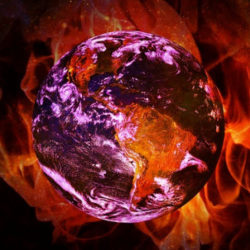
A fiery image of Earth with flames surrounding it, highlighting the continents in vivid purple and orange tones.

What Is Causing Climate Change?

Let’s look at climate change from a scientific perspective, but acknowledge lay public opinion. About 97% of scientists, based on published peer reviewed papers, and 75% of the lay public, based on opinion polls, believe the current trend in global warming is due to human activity, especially burning fossil fuels. Here are some salient facts:

  • According to the Intergovernmental Panel on Climate Change (IPCC), a scientific intergovernmental body under the auspices of the United Nations, the Earth’s climate is warming, as discuss in Chapter 5. The IPCC estimates there is a 95% probability that humans are causing most of it by burning fossil fuels, engaging in deforestation, and using aerosol spray
  • According to the United States Environmental Protection Agency, the number one cause of climate change comes from burning fossil fuels, with over 40% due to burning coal to generate electricity and 33% from vehicle emissions.
  • Numerous other respected scientific organization, such as the Royal Society, American Geophysical Union, Joint Science Academies, American Meteorological Society, and American Association for the Advancement of Science, also attribute global warming to the human-caused increase in greenhouse gas concentrations
  • About 3% of scientists disagree and the popular media have given them strong representation. This in turn has caused significant lay public and political debate, especially in the United States
  • The scientific consensus in a “nutshell”: The rapid increase in carbon dioxide, which has almost doubled during the last century to the point it is becoming toxic to numerous species, is responsible for the “greenhouse effect.” {Note: Merriam-Webster.com defines the “greenhouse effect” as follows: warming of the surface and lower atmosphere of a planet (as Earth or Venus) that is caused by conversion of solar radiation into heat in a process involving selective transmission of short wave solar radiation by the atmosphere, its absorption by the planet’s surface, and reradiation as infrared which is absorbed and partly reradiated back to the surface by atmospheric gases}
  • Dissenting scientific views: There is no consensus among dissenting scientists regarding the cause of climatic change. Dissenting debate has centered on two points:
  1. Climate sensitivity – how responsive the climate system might be to any given level of greenhouse gases
  2. Consequences of global warming – how the climate will respond locally and globally to greenhouse gases

The preponderance of scientific evidence makes a strong case that human activity, especially burning fossil fuels, is responsible for global warming. It points out no scientific body of national or international standing maintains a formal opinion dissenting from any of the main points put forward by the IPCC.

A split image showing one side with a green tree under a blue sky and the other side with a barren tree under an orange sky on dry cracked ground.

Is Climate Change Real?

Although the reality of climate change has become a political issue, the scientific evidence argues it is real. Consider these points:

  • The change in the atmosphere – NASA data indicates that the levels of carbon dioxide (CO2) in the atmosphere are higher than they have been at any time in the past 400,000 years. In 2013, carbon dioxide levels surpassed 400 ppm (i.e., parts per million) for the first time in recorded history, and it continues to rise. At levels above 550 ppm, the carbon dioxide will become harmful to humans
  •  Global temperature increase – NASA data shows an increase in global temperatures. Best scientific estimates suggest a rise of 1.4 degrees Fahrenheit (0.8 degrees Celsius) since 1880. Recent data indicates most of this warming has occurred since the 1970s
  • Sea level rise – EPA data, including satellite measurements, indicates a global sea level rise of 8 inches since 1880 due to melting ice at the polar caps and the thermal expansion of “warming oceans”
  • The warming oceans – NASA data indicates the top 700 meters (about 2,300 feet) of ocean showing warming of 0.302 degrees Fahrenheit since 1969
  • Shrinking ice sheets – NASA’s data shows Greenland lost 150 to 250 cubic kilometers (36 to 60 cubic miles) of ice per year between 2002 and 2006. Antarctica lost about 152 cubic kilometers (36 cubic miles) of ice between 2002 and 2005
  • Declining Arctic sea ice – NASA data indicates that the Arctic sea ice has declined rapidly over the last several decades. In response, NASA has launched “Operation IceBridge” to image the Earth’s polar ice and understand processes that connect the polar regions with the global climate system
  • Glacial retreat – factually, glaciers are retreating around the world, including in the Alps, Himalayas, Andes, Rockies, Alaska and Africa
  • Extreme events – According to the EPA the number of record high temperature events has been increasing, while the number of record low temperature events has been decreasing, since 1950. Concurrently, intense rainfall events are increasing
  • Ocean acidification – According to the National Oceanic and Atmospheric Administration (NOAA), acidity of surface ocean waters has increased by about 30 percent since the Industrial Revolution. This increase results from the amount of carbon dioxide absorbed by the upper layer of the oceans, which is increasing by about 2 billion tons per year
  • Decreased snow cover – NASA satellites reveal that the spring snow cover in the Northern Hemisphere has decreased over the past five decades and that the snow is melting earlier

The preponderance of scientific evidence suggests that the climate is trending toward catastrophic change. This leads to an important question, “Why?” I’ll address “Why?” in my next post.