All posts by admin

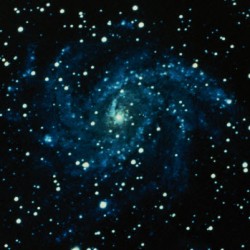
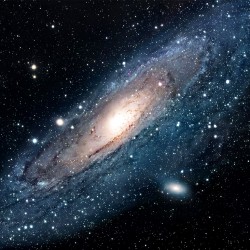
A stunning spiral galaxy with bright core and swirling arms filled with stars and cosmic dust in deep space.

Big Bang Science Theory Explained Video

Physicist Louis A. Del Monte discusses the Big Bang science theory, which is widely accepted by the scientific community to describe the evolution of the universe. It also points out three major issues that the theory doesn’t address:

1. The origin of the Big Bang itself
2. The absence of antimatter in the universe
3. The initial inflation (i.e. exponential expansion of energy) of the Big Bang.

Find more in depth knowledge about the Big Bang theory in Del Monte’s new book, Unraveling the Universe’s Mysteries, available at Amazon.com.

Introdution to Unraveling the Universe's Mysteries Book

Introdution to Unraveling the Universe’s Mysteries Book

This video welcomes visitors and introduces Louis A. Del Monte, author, physicist and the Chief Executive Officer of Del Monte and Associates, Inc. It briefly introduces Del Monte’s new book, “Unraveling the Universe’s Mysteries,” available at Amazon.com https://amzn.to/STe9fW. For more information about Louis A. Del Monte visit https://louisdelmonte.com.

end of the universe

What Caused the Big Bang’s Early Inflation?

According to the most accepted theory of the Big Bang, the early universe underwent a rapid exponential expansion. The rapid exponential expansion was termed “inflation” by American physicist Alan Guth in 1980. While the mechanism for inflation remains a mystery, the basic theory makes a number of predictions that explain the universe we observe today. For example, it explains why the universe is flat (i.e. obeys Euclidian geometry), homogeneous (i.e. uniform), and isotropic (i.e. the same in all directions). Without inflation, the Big Bang’s initial expansion would allow various interactions between the energetic entities resulting in a highly curved, heterogeneous universe. Although the cause of the initial inflation remains a mystery, it is widely accepted as part of Big Bang cosmology.

In this article, I will propose a mechanism for inflation. Much of what I will discuss is also discussed in my book, Unraveling the Universe’s Mysteries, available at Amazon.com.

The basic problem of explaining the cause of inflation begins with the fundamental model of the Big Bang. The majority of the scientific community holds the Big Bang was an infinitely dense point (i.e. region) of energy that suddenly underwent a rapid exponential expansion (i.e. inflation). The problem with this model is that it does not provide a mechanism for inflation. As an example, consider a glass filled with water at room temperature. Next, imagine we gently introduce a drop of water-soluble ink, at room temperature, in the center of the water at the glass’ surface. What would we expect? Generally, we would expect the ink to begin to expand, via dilution in the water, at some constant rate. Eventually the entire glass would be a uniform solution of ink and water. We would not expect the ink to undergo inflation (i.e. a rapid exponential dilution). In this example, the drop of ink represents the infinitely energy-dense early universe just prior to the Big Bang.

In my book, Unraveling the Universe’s Mysteries, I make the case that the Big Bang is not the result of a single infinitely dense energy point. Instead I suggest the Big Bang is the result of a collision of two infinitely dense energy points–one matter and the other antimatter. I term this theory of the Big Bang the Big Bang Duality theory. Explaining the Big Bang Duality theory is beyond the scope of this article. However, if you are willing to entertain it as a possibility, it makes explaining the early inflation of the universe relatively simple.

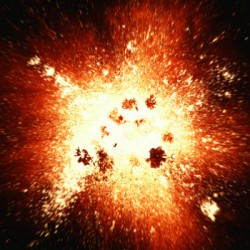
Consider what occurs when a particle of matter collides with a particle of antimatter. Essentially, we get a small explosion of energy, often resulting in matter and photons. The key point is that the Big Bang Duality theory posits a collision of two infinitely dense energy points–one matter and the other antimatter–which would result in an immense explosion, resulting in the initial inflation of the universe.

Of course, there is a key question: Is there any experimental evidence that would suggest the Big Bang Duality theory is valid? The short answer is yes. For example, it explains the almost near absence of antimatter in the universe. As mentioned earlier, a full discussion of the Big Bang Duality theory is delineated in Unraveling the Universe’s Mysteries.

It is hard to believe that the Big Bang was not a single point of energy, but rather two points of energy (one matter and the other antimatter) that collided to initiate inflation and form the universe we observe today. Welcome to the edge of science, where physics and metaphysics blur.
Abstract fractal pattern resembling a cosmic or underwater scene with glowing blue and white textures.

What Caused the Big Bang?

While it is widely accepted by the scientific community that the universe resulted from the Big Bang, the origin of the Big Bang remains one of the greatest mysteries of modern science.

The Big Bang theory stipulates the universe evolved from an infinitely dense energy point that suddenly expanded 13.7 billion years ago. Significant cosmological evidence supports this theory. However, the Big Bang theory does not explain the origin of the infinitely dense energy point.

Two recently published books, available at Amazon.com, tackle the question head on. They are:

  • A Universe from Nothing: Why There is Something Rather Than Nothing, (2012), by Lawrence Maxwell Krauss
  • Unraveling the Universe’s Mysteries, (2012), by Louis A. Del Monte

In essence, both books attribute the formation of the infinitely dense energy point to a quantum fluctuation in a super-universe. This begs two questions:

  1. What is a quantum fluctuation?
  2. What is a super-universe?

A quantum fluctuation is a theory in quantum mechanics that argues there are certain conditions where a point in space can experience a temporary change in energy, such as an increase in energy. When this occurs, the increase in energy can give rise to virtual particles.

A super-universe, sometimes referred to as the “Bulk” or the multiverse, is type of universe capable of giving rise to quantum fluctuations resulting in one or more universes.

The theory that a quantum fluctuation in the Bulk gave rise to the infinitely dense energy point is similar to a phenomenon we observe in a laboratory vacuum. According to the U.S. Department of Energy: Newton: Ask a Scientist, “Quantum Fluctuations,” 2004, “Particles can ‘pop up’ out of a vacuum so long as they do not have too large a mass or do not last too long.”

The significant difference between the theories forwarded in the aforementioned books is that Unraveling the Universe’s Mysteries argues that the formation was not a single infinitely energy dense particle (a “singularity”), but a particle pair (a “duality”). The particle pair consists of one single infinitely energy dense particle of matter and another of antimatter. The Big Bang occurs when the particle pair collides in the Bulk and initiates the Big Bang. Hence, it is named the Big Bang Duality theory.

Numerous observations about virtual particles suggest a “duality,” but there is no scientific consensus that virtual particles always appear as a matter-antimatter pair. However, this view is commonly held in quantum mechanics, and this creation state of virtual particles maintains the conservation of energy.

The Big Bang Duality theory is compelling because it allows us to explain the almost complete absence of antimatter in the universe, a mystery that continues to baffle modern science. This mystery is unraveled in Del Monte’s book and will be discussed in a future article.

The entire concept that it is possible to get something from nothing is counter intuitive. Indeed, it may sound like a new science fiction story. However, it was Paul Dirac, a British physicist and Nobel Prize Laureate, who first postulated in 1930 that empty space (a vacuum) consists of a sea of virtual electron-positron (matter-antimatter) pairs, known as the Dirac sea. This was experimentally confirmed in 1932. Modern-day physicists, familiar with the Dirac-sea theory of virtual particles, claim there is no such thing as empty space. They argue it contains virtual particles.

This is hard, if not impossible, to believe. Our entire universe came from nothing. Welcome to the edge of science, where physics and meta-physics blur.


A vibrant spiral galaxy surrounded by numerous bright stars in deep space.

The Reality of Time

Philosophers have been pondering the nature of time for at least the last 2500 years. The key question boil down to: is time real or is it a mental construct?

We often equate time with change, such as sand flowing through an hourglass. However, imagine if there were no change. Would time still exist? To address this question, let us take an example from Unraveling the Universe’s Mysteries (2012), by Louis A. Del Monte (available at Amazon.com). The example will be a thought experiment. We do not currently have technology that permits us to perform this example in a lab, but performing it in our minds will illustrate the point.

Consider an atom frozen at absolute zero. All motion in the atom would stop. I am aware that this thought experiment violates the laws of thermodynamics and quantum mechanics. However, please remember it is a thought experiment to illustrate point. The purpose of this thought experiment is to allow us, conceptually, to separate existence from change. From the standpoint of the atom, there is no change. All motion has stopped. Yet, the atom continues to exist.

This raises the question: what does it mean to exist? One possible scenario is to equate existence to movement in the fourth dimension. If the atom were to move in any of the typical three-dimensional spatial coordinates, the atom would have kinetic energy associated with that movement. Similarly, one could argue that an atom moving in the fourth dimension would also have kinetic energy.

In Einstein’s special theory of relativity, the typical three-dimensional spatial coordinates are what we experience in everyday life, namely height, width, and length. The fourth dimension is also a spatial coordinate, but is equal to ict, where i = , c is the speed of light in empty space, and t is time, representing the numerical order of physical events measured with clocks.

If we want to express movement in the fourth dimension, we would need to use the mathematical discipline of calculus. If we want to calculate the kinetic energy associated with that movement, we would use the relativistic equation for kinetic energy. These calculations have been performed and are documented in aforementioned book, Unraveling the Universe’s Mysteries. For the sake of brevity, I will only present the result here. The kinetic energy associated with moving in the fourth dimension is:

KEX4 = -.3mc2

Where KEX4is the energy associated with an object’s movement in in the fourth dimension X4, m is the rest mass of an object, and c is the speed of light in a vacuum. I have termed this equation the Existence Equation Conjecture.

What does it mean? My interpretation is that existence requires negative energy. In fact, even for a small object like a cupcake, the negative energy would be enormous, typically about equal to an atomic bomb, only negative.

In my book, Unraveling the Universe’s Mysteries, I used the equation to explain the physics behind time dilation. I will just briefly describe here that I compare the kinetic energy required to extend the life of a muon (a negatively charged fundamental particle about 200 times heavier than an electron) to the energy required to satisfy the Existence Equation Conjecture for that extended life. Correlation of the experimental results of accelerating a muon (i.e. adding kinetic energy to the muon) to increase its existence (known as time dilation) are within 2% predicted by the Existence Equation Conjecture.

Many of you may wonder why I added the word “Conjecture.” I have only one solid data point and feel the scientific community should weigh in on the validity of the equation. Therefore, I consider it a conjecture at this point.

If the equation continues to hold up under scientific scrutiny, then we have a new insight into the nature of existence.

It is hard to believe or even imagine that the simple state of being (existence) requires negative energy. Welcome to the edge of science, where physics and metaphysics blur.