All posts by admin

Abstract cosmic scene with transparent spheres floating against a colorful galaxy backdrop.

Is the Universe Finite or Infinite?

The universe we can see and measure is about 13.8 billion years old. However, the universe is larger than 13.8 billion light years in diameter due to the expansion and subsequent inflation of space, in accordance with the Big Bang theory. In fact, our best current estimate, taking expansion and inflation of space into account, puts the edge of the observable universe at about 46–47 billion light-years away from Earth. This “edge” would represent our current cosmological horizon.

If you assume that the universe is infinite, then logically it would extend beyond the current cosmological horizon. Scientists have termed this infinite universe a “super-universe.” If the infinite universe theory is correct, our universe may be one universe out of uncountable billions in the super-universe. We cannot see the other universes because our current observation technology is unable to look through the cosmic microwave-background radiation, which originated when the matter in the universe was plasma (hot, ionized gas), and thus opaque. In theory, if we develop more advanced observation technology, such as a neutrino telescope (one capable of detecting neutrinos) or even a gravitational telescope (one capable of detecting the yet-undiscovered gravitation particle called a “graviton”), we would be able to look beyond the cosmic microwave-background radiation and see older events. We would have a new cosmological horizon, but we would never be able to examine the “edge” of an infinite universe. Why? It has no edge—and advances in cosmic observation technology will not matter. Even the hypothetical graviton (the theoretical particle of gravity), traveling at the speed of light, would never reach us from an infinitely distant universe.

Why is an infinite universe even plausible? We know from actual observations that the universe’s expansion is accelerating. The farther out our instruments allow us to observe, we can measure that the expansion is accelerating, and even exceeding the speed of light. The accelerating expansion is termed “inflation,” and was confirmed in the late 1990s. Until inflation’s confirmation, scientists believed that gravity would eventually slow the universe’s expansion, and even eventually cause the universe to contract in a “Big Crunch,” since gravity causes everything to pull on everything.

Long before we had any observable proof of the universe’s inflationary expansion, two scientists independently postulated its existence in 1979. Unfortunately, one scientist, Alexei Starobinsky of the L.D. Landau Institute of Theoretical Physics in Moscow, was unable to communicate his work to the worldwide scientific community due to the political policies of the former Soviet Union. Fortunately, the other scientist, Alan Guth, Professor of Physics at the Massachusetts Institute of Technology, developed an inflationary model independently, and communicated it worldwide. Guth’s model, however, was not able to reconcile itself with the isotropic, homogeneous universe we observe today. In other words, to the best of our current ability to measure it, the universe essentially looks the same in every direction. Andrei Linde, Russian-American theoretical physicist and Professor of Physics at Stanford University, solved Guth’s theoretical dilemma in 1986. Linde published an alternative model entitled “Eternally Existing Self-Reproducing Chaotic Inflationary Universe” (known as “Chaotic Inflation theory”). In Linde’s model, our universe is one of countless others. A prediction of the chaotic inflation theory is an infinite universe with bubble universes within it. Would they be the same as our universe? No one knows. Perhaps one or more universes would be different from ours. However, being infinite, an infinite number of universes would be identical to ours, even down to the last atom, obeying the same physical laws.

The concept of an infinite universe would also imply an infinite number of us (you, me, and everyone else) are out there somewhere beyond the cosmic horizon. Given an infinite number of us, we are living out every possible scenario. This is difficult to comprehend because infinite numbers cannot be comprehended. Here is a simple way to think about this. If you play poker, what are the odds that you will be dealt a royal flush (Ace, King, Queen, Jack, Ten, all in the same suit) in the first five cards? They are 2,598,960 to 1. That means you will get a royal flush about once every 2,598,960 hands of five-card poker (known as five-card stud poker). Even if you play every day, and for numerous hours a day, you may never get one. However, if you have forever, and continue playing, eventually you will get one, then another, and with infinite time, an uncountable number (an infinite number). Using this example, if there are an infinite number of us in the universe, then each of us in some part of the universe will experience a possible scenario. Since there are an infinite number of us, as a group we will experience every conceivable scenario. For example, in one of these possible scenarios, you would be the President of the United States.

I recognize the implications of an infinite universe are difficult to comprehend. A natural question to ask is, is it possible? The fact is, it’s theoretically possible, but there is no conclusive physical evidence. Recently, it’s been suggested that irregularities observed in the cosmic microwave background may be evidence of another universe bumping into ours. However, there is no scientific consensus regarding that hypothesis, so I am going to leave that discussion for a future post. Currently, it is scientifically valid to assert we do not know if the universe is finite or infinite.


A bright UFO hovering in the night sky, shining a beam of light down onto trees below.

Is There Any Scientific Evidence UFO’s Are Real?

Internet searches for the keyword acronym “UFO” (unidentified flying object) are among the most popular on the Internet. According to Google, there are five million global searches per month for the keyword acronym “UFO”(without the quotes).

Let us start with a little background. Surprisingly, the United States Air Force (USAF) officially created the acronym “UFO” in 1953. Their intent was to replace the more popular phrases such as “flying saucers” and “flying discs” because of the variety of shapes reported. In their official statement, the United States Air Force defined the term UFO as “any airborne object which, by performance, aerodynamic characteristics, or unusual features, does not conform to any presently known aircraft or missile type, or which cannot be positively identified as a familiar object.”

The phenomena, namely UFO sightings, are worldwide. Various governments and civilian committees have studied them. The conclusions reached by the various organizations that have studied them vary significantly. Some conclude UFOs do not represent a threat and are of no scientific value (see, e.g., 1953 CIA Robertson Panel, USAF Project Blue Book, Condon Committee). Others conclude the exact opposite (see, e.g., 1999 French COMETA study, 1948 USAF Estimate of the Situation, Sturrock Panel).

Given the sheer volume of unexplained sightings by credible witnesses, including military, police, and civilian witnesses, there is little doubt that the UFO phenomenon is real and worldwide, and for the most part, there is no widely accepted public or scientific explanation of what they are or what their intentions might be.

Three popular speculations regarding UFOs are:

  1. They are future generations of humans who have mastered the science of time travel, and they are coming back either to observe us or to carry out other intentions.
  2. They are technologically advanced aliens from another planet who have mastered the science of time travel, and they are coming here either to observe us or to carry out other intentions.
  3. They are secret government (United States or any government) experimental spacecraft, and by some accounts they are reverse engineered from advanced alien spacecraft in the government’s possession.

In my estimation, the ninety-page 1999 French COMETA study (the English translation stands for“Committee for In-Depth Studies”) is the most authoritative source of UFO information and provides a thoughtful, balanced view. Here are the facts that led me to this position:

  • The COMETAmembership consisted of an independent group of mostly former “auditors” (i.e., defense and intelligence analysts) at the Institute of Advanced Studies for National Defense, or IHEDN, a high-level French military think tank, and by various other highly qualified experts. The independence of the group lends credence that the findings and conclusions would not be censored.
  • The French government did not sponsor it. This lends credence that the COMETA members were objective and not politically guided.
  • The COMETA study was carried out over several years. This lends credence that the COMETA study is a thorough account of UFO phenomena, not a hastily put out government press release.

The 1999 COMETA study concluded:

  1. About 5% of the UFO cases studied were inexplicable.
  2. The best hypothesis to explain them was the extraterrestrial hypothesis (ETH), but they acknowledged this is not the only possible hypothesis.
  3. The authors accused the US government of engaging in a massive cover-up of UFO evidence.

According to the 1999 COMETA study, a small but significant percentage of UFOs are likely of extraterrestrial origin. You will find an English translation of the 1999 COMETAstudy at this website address: https://www.ufoevidence.org/newsite/files/COMETA_part2.pdf.

Based on the above information, the answer to the subject question (i.e., Is There Any Scientific Evidence UFO’s Are Real?) is no. However, the COMETA study goes a long way in establishing UFO’s as a phenomena worthy of scientific study.

A surreal, glowing clock surrounded by swirling golden particles and abstract light patterns in a dark background.

Can Time Travel Be Used as a Weapon?

Time travel will be the ultimate weapon. With it, any nation can write its own history, assure its dominance, and rule the world. However, having the ultimate weapon also carries the ultimate responsibility. How it is used will determine the fate of humankind. These are not just idle words. This world, our Earth, is doomed to end. Our sun will eventually die in about five billion years. Even if we travel to another Earth-like planet light-years away, humankind is doomed. The universe grows colder each second as the galaxies accelerate away from one another faster than the speed of light. The temperature in space, away from heat sources like our sun, is only about 3 degrees Kelvin (water freezes at 273 Kelvin) due to the remnant heat of the big bang, known as the cosmic microwave background. As the universe’s acceleration expands, eventually the cosmic microwave background will disperse, and the temperature of the universe will approach absolute zero (-273 degrees Kelvin). Our galaxy, and all those in our universe, will eventually succumb to the entropy apocalypse (i.e., “heat death”) in a universe that has become barren and cold. If there is any hope, it lies in the technologies of time travel. Will we need to use a traversable wormhole to travel to a new (parallel) universe? Will we need to use a matter-antimatter spacecraft to be able to traverse beyond this universe to another?

I believe the fate of humankind and the existence of the universe are more fragile than most of us think. If the secrets of time travel are acquired by more than one nation, then writing history will become a war between nations. The fabric of spacetime itself may become compromised, hastening doomsday. Would it be possible to rip the fabric of spacetime beyond a point that the arrow of time becomes so twisted that time itself is no longer viable? I do not write these words to spin a scary ghost story. To my mind, these are real dangers. Controlling nuclear weapons has proved difficult, but to date humankind has succeeded. Since Fat Man, the last atomic bomb of World War II, was detonated above the city of Nagasaki, there has been no nuclear weapon detonated in anger. It became obvious, as nations like the former Soviet Union acquired nuclear weapons, that a nuclear exchange would have no winners. The phrase “nuclear deterrence” became military doctrine. No nation dared use its nuclear weapons for fear of reprisal and total annihilation.

What about time travel? It is the ultimate weapon, and we do not know the consequences regarding its application. To most of humankind, time travel is not a weapon. It is thought of a just another scientific frontier. However, once we cross the time border, there may be no return, no do-over. The first human time travel event may be our last. We have no idea of the real consequences that may ensue.

Rarely does regulation keep pace with technology. The Internet is an example of technology that outpaced the legal system by years. It is still largely a gray area. If time travel is allowed to outpace regulation, we will have a situation akin to a lighted match in a room filled with gasoline. Just one wrong move and the world as we know it may be lost forever. Regulating time travel ahead of enabling time travel is essential. Time travel represents humankind’s most challenging technology, from every viewpoint imaginable.

What regulations are necessary? I have concluded they need to be simple, like the nuclear deterrence rule (about thirteen words), and not like the US tax code (five million words). When you think about it, the rule of nuclear deterrence is simple: “If you use nuclear weapons against us, we will retaliate, assuring mutual destruction.” That one simple rule has kept World War III from happening. Is there a similar simple rule for time travel?

I think there is one commonsense rule regarding time travel that would assure greater safety for all involved parties. I term the rule “preserve the world line.” Why this one simple rule?

Altering the world line (i.e., the path that all reality takes in four-dimensional spacetime) may lead to ruination. We have no idea what changes might result if the world line is disrupted, and the consequences could be serious, even disastrous.

The preserve the world line rule is akin to avoiding the “butterfly effect.” This phrase was popularized in the 2004 film The Butterfly Effect, with the now famous line: “It has been said that something as small as the flutter of a butterfly’s wing can ultimately cause a typhoon halfway around the world.” Although the line is from a fictional film, the science behind it is chaos theory, which asserts there is a sensitive dependence on the initial conditions of a system that could result in a significant change in the system’s future state. Edward Lorenz, American mathematician, meteorologist, and a pioneer of chaos theory, coined the phrase “butterfly effect.” For example, the average global temperature has risen about one degree Fahrenheit during the last one hundred years. This small one-degree change has caused the sea levels around the world to rise about one foot during the same period. Therefore, I believe, it is imperative not to make even a minor change to the past or future during time travel until we understand the implications.

Based on the above discussion, the implications of using time travel as a weapon are enormous. However, if time travel is used as a a weapon, we have no idea how this may impact the world line. If it is possible to adhere to the preserve the world line rule, traveling in time may become safe. Remember, our first nuclear weapons were small compared to today’s nuclear weapons. Even though they were comparatively small, the long-term effects included a 25% increase in the cancer rate of survivors during their lifetime. We had no idea that this side effect would result. Similarly, we have no idea what the long-term effects will be if we alter the world line. We already know from laboratory experiments that the arrow of time can be twisted. Things done in the future can alter the past. Obviously, altering the past may alter the future. We do not know much about it because we have not time traveled in any significant way. Until we do, preserving the world line makes complete sense.

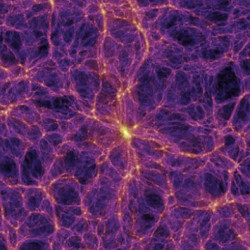
A visualization of cosmic web structure showing interconnected filaments and dense clusters of galaxies in space.

Why Most of the Universe Is Missing?

In 1933, Fritz Zwicky (California Institute of Technology) made a crucial observation. He discovered the orbital velocities of galaxies were not following Newton’s law of gravitation (every mass in the universe attracts every other mass with a force inversely proportional to the square of the difference between them). They were orbiting too fast for the visible mass to be held together by gravity. If the galaxies followed Newton’s law of gravity, the outermost stars would be thrown into space. He reasoned there had to be more mass than the eye could see, essentially an unknown and invisible form of mass that was allowing gravity to hold the galaxies together. Zwicky’s calculations revealed that there had to be 400 times more mass in the galaxy clusters than what was visible. This is the mysterious “missing-mass problem.” It is normal to think that this discovery would turn the scientific world on its ear. However, as profound as the discovery turned out to be, progress in understanding the missing mass lags until the 1970s.

In 1975, Vera Rubin and fellow staff member Kent Ford, astronomers at the Department of Terrestrial Magnetism at the Carnegie Institution of Washington, presented findings that reenergized Zwicky’s earlier claim of missing matter. At a meeting of the American Astronomical Society, they announced the finding that most stars in spiral galaxies orbit at roughly the same speed. They made this discovery using a new, sensitive spectrograph (a device that separates an incoming wave into a frequency spectrum). The new spectrograph accurately measured the velocity curve of spiral galaxies. Like Zwicky, they found the spiral velocity of the galaxies was too fast to hold all the stars in place. Using Newton’s law of gravity, the galaxies should be flying apart, but they were not. Presented with this new evidence, the scientific community finally took notice. Their first reaction was to call into question the findings, essentially casting doubt on what Rubin and Ford reported. This is a common and appropriate reaction, until the amount of evidence (typically independent verification) becomes convincing.

In 1980, Rubin and her colleagues published their findings (V. Rubin, N. Thonnard, W. K. Ford, Jr, (1980). “Rotational Properties of 21 Sc Galaxies with a Large Range of Luminosities and Radii from NGC 4605 (R=4kpc) to UGC 2885 (R=122kpc).” Astrophysical Journal 238: 471.). It implied that either Newton’s laws do not apply, or that more than 50% of the mass of galaxies is invisible. Although skepticism abounded, eventually other astronomers confirmed their findings. The experimental evidence had become convincing. “Dark matter,” the invisible mass, dominates most galaxies. Even in the face of conflicting theories that attempt to explain the phenomena observed by Zwicky and Rubin, most scientists believe dark matter is real. None of the conflicting theories (which typically attempted to modify how gravity behaved on the cosmic scale) was able to explain all the observed evidence, especially gravitational lensing (the way gravity bends light).

Currently, the scientific community believes that dark matter is real and abundant, making up as much as 90% of the mass of the universe. However, dark matter is still a mystery. The most popular theory of dark matter is that it is a slow-moving particle. It travels up to a tenth of the speed of light. It neither emits nor scatters light. In other words, it is invisible. Scientists call the mass associated with dark matter a “WIMP” (Weakly Interacting Massive Particle). However, the WIMP particle is speculative and to date has not been proven to exist. In addition, it is not predicted by the standard model of particle physics. (Some physicists have performed reformulations of the standard model to have it predict the WIMP and other particles. However, none of the particles predicted by the reformulated standard model have ever been verified.)

There is little doubt, though, that dark matter is real. There experimental evidence is solid. The rotation of stars, planets, and other celestial masses orbit galaxies, like ours, too rapidly relative to their mass and the gravitational pull exerted on them in the galaxy. For example, an outermost star should be orbiting slower than a similar-size star closer to the center of the galaxy, but we observe they are orbiting at the same rate. This means they are not obeying Newton’s laws of motion or Einstein’s general theory of relativity. This faster orbit of the outermost stars suggests more mass is associated with the stars than we are able to see. If not, the stars would fly free of their orbits, into outer space.
We can see the effect dark matter has on light. It will bend light the same way ordinary matter bends light. This effect is gravitational lensing. The visible mass is insufficient to account for the gravitational lensing effects we observe. Once again, this suggests more mass than what we can see.

We are able to use the phenomena of gravitational lensing to determine where the missing mass (dark matter) is, and we find it is throughout galaxies. It is as though each galaxy in our universe has an aura of dark matter associated with it. We do not find any dark matter between galaxies.

While there is no doubt that dark matter is real, its nature remains a mystery. Is it a particle? Is it a new form of energy? All effort to detect the WIMP particle over the last decade or so have been unsuccessful, including considerable effort by Stanford University, University of Minnesota, and Fermilab. Where does this leave us? The evidence is telling us the WIMP particle might not exist. We have spent about ten years, and unknown millions of dollars, which so far leads to a dead end. This appears to beg a new approach.

To kick off the new approach, consider the hypothesis that dark matter is a new form of energy. We know from Einstein’s mass-energy equivalence equation (E = mc2), that mass always implies energy, and energy always implies mass. For example, photons are massless energy particles. Yet, gravitational fields influence them, even though they have no mass. That is because they have energy, and energy, in effect, acts as a virtual mass.

In my book, Unraveling the Universe’s Mysteries, I suggested an approach to test the hypothesis that dark matter may be a new form of energy. Because of the length of discussion necessary to describe my suggested approach, I will not go into it in this post. My main point in this post is to suggest we widen our investigation into the nature of dark matter to include the hypothesis that it may be a new form of energy. As a scientist, I think we have to broaden our search. I acknowledge it is possible that dark matter may be a WIMP particle, but we have no conclusive evidence after over ten years of research. Therefore, we should widen our search to include the hypothesis that it is a new form of energy.

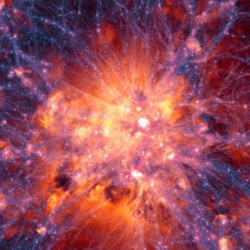
A vibrant cosmic explosion with bright orange and red hues surrounded by a dark purple and blue starry background.

Why Is There Almost No Antimatter In the Universe?

One of the great mysteries of our universe, and a weakness of the Big Bang theory, is that matter, not antimatter, totally makes up our universe. According to the Big Bang theory, there should be equal amounts of matter and antimatter. (Note: The Big Bang theory asserts that the universe originated from a highly dense energy state that expanded to form all that we observe as reality.)

If there were any significant quantities of antimatter in our galaxy, we would see radiation emitted as it interacted with matter. We do not observe this. It is natural to ask the question: where is the missing antimatter? (Recall, that antimatter is the mirror image of matter. For example, if we consider an electron matter, the positron is antimatter. The positron has the same mass and structure as an electron, but the opposite charge. The electron has a negative charge, and the positron has a positive charge. Antimatter bears no relationship to dark matter. (Dark matter is discussed in the next chapter.)

Several theories float within the scientific community to resolve the missing antimatter issue. The currently favored theories (baryogenesis theories) employ sub-disciplines of physics and statistics to describe possible mechanisms. The baryogenesis theories start out with the same premise, namely the early universe had both baryons (an elementary particle made up of three quarks) and antibaryons (the mirror image of the baryons). At this point, the universe underwent baryogenesis. Baryogenesis is a generic term for theoretical physical processes that produce an asymmetry (inequality) between matter and antimatter. The asymmetry, per the baryogenesis theories, resulted in significant amounts of residual matter, as opposed to antimatter. The major differences between the various baryogenesis theories are in the details of the interactions between elementary particles. Baryogenesis essentially boils down to the creation of more matter than antimatter. In other words, it requires the physical laws of the universe to become asymmetrical. We need to understand what this means.

The symmetry of physical laws is widely accepted by the scientific community. What does “symmetry” mean in this context?

  • First, it means that the physical laws do not change with time. If a physical law is valid today, it continues to be valid tomorrow, and any time in the future. This is a way of saying that a time translation of a physical law will not affect its validity.
  • Second, it means that the physical laws do not change with distance. If the physical law is valid on one side of the room, it is valid on the other side of the room. Therefore, any space translation of a physical law will not affect its validity.
  • Lastly, it means that the physical laws do not change with rotation. For example, the gravitational attraction between two masses does not change when the masses rotate in space, as long as the distance between them remains fixed. Therefore, any rotational translation of a physical law will not affect its validity.

This is what we mean by the symmetry of physical laws.

Next, we will address the asymmetry of physical laws. In this context, “asymmetry” means that the symmetry of physical laws no longer applies. For example, a law of physics may be valid in a specific location, but not in another, when both locations are equivalent. Is this possible? Maybe. There has been experimental evidence that the asymmetry is possible (a violation of the fundamental symmetry of physical laws). For example, radioactive decay and high-energy particle accelerators have provided evidence that asymmetry is possible. However, the evidence is far from conclusive. Most importantly, it does not fully explain the magnitude of the resulting matter of the universe.

This casts serious doubt on the baryogenesis theories. In addition, the baryogenesis theories appear biased by our knowledge of the outcome. By making certain (questionable) assumptions, and using various scientific disciplines, they result in the answer we already know to be true. The universe consists of matter, not antimatter. Therefore, baryogenesis theories may not be an objective explanation. However, apart from the Big Bang Duality theory, it is science’s best theory of the missing antimatter dilemma.

The Big Bang Duality theory, described in my book Unraveling the Universe’s Mysteries and also summarized below, provides a simpler explanation, which does not violate the fundamental symmetry of physical laws. From this viewpoint, it deserves consideration.

In essence, the Big Bang Duality theory hypothesizes that the Big Bang was the result of a collision of two infinitely dense matter-antimatter particles in the Bulk (i.e. A super-universe capable of holding countless universes. In theory, it contains our own universe, as well as other universes.).
 
This theory rests on the significant experimental evidence that when virtual particles emerge from “nothing,” they are typically created in matter-antimatter pairs. Based on this evidence, I argued in my book, Unraveling the Universe’s Mysteries, the Big Bang was a result of a duality, not a singularity as is often assumed in the Big Bang model. The duality would suggest two infinitely dense energy particles pop into existence in the Bulk. These are infinitely energy-dense “virtual particles.” One particle would be matter, the other antimatter. The collision between the two particles results in the Big Bang.
 
What does this imply? It implies that the Big Bang was the result of a matter-antimatter collision. What do we know about those types of collisions from our experiments in the laboratory? Generally, when matter and antimatter collide in the laboratory, we get “annihilation.” However, the laws of physics require the conservation of energy. Therefore, we end up with something, rather than nothing. The something can be photons, matter, or antimatter.
 
You may be tempted to consider the Big Bang Duality theory a slightly different flavor baryogenesis theory. However, the significant difference rests on the reactants, those substances undergoing the physical reaction, when the infinitely energy-dense matter-antimatter particles collide. The Big Bang Duality postulates the reactants are two particles (one infinitely energy-dense matter particle and one infinitely energy-dense antimatter particle). When the two particles collide, the laboratory evidence suggests the products that result are matter, photons, and antimatter. Contrary to popular belief, we do not get annihilation (nothing), when they collide. This would violate the conservation of energy. Consider this result. Two of the three outcomes, involving the collision of matter with antimatter, favor our current universe, namely photons and matter. This suggests that the collision of two infinitely dense matter-antimatter pairs statistically favor resulting in a universe filled with matter and photons. In other words, the universe we have. While not conclusive, it is consistent with the Big Bang being a duality. It is consistent with the reality of our current universe, and addresses the issue: where is the missing antimatter? The answer: The infinitely energy-dense matter-antimatter pair collides. The products of the collision favor matter and energy. Any resulting antimatter would immediately interact with the matter and energy. This reaction would continue until all that remains is matter and photons. In fact, a prediction of the Big Bang Duality theory would be the absence of observable antimatter in the universe. As you visualize this, consider that the infinitely energy-dense matter and antimatter particles are infinitesimally small, even to the point of potentially being dimensionless. Therefore, the collision of the two particles results in every quanta of energy in each particle contacting simultaneously.
 
You may be inclined to believe a similar process could occur from a Big Bang singularity that produces equal amounts of matter and antimatter. The problem with this theory is that the initial inflation of the energy (matter and antimatter) would quickly separate matter and antimatter. While collisions and annihilations would occur, we should still see regions of antimatter in the universe due to the initial inflation and subsequent separation. If there were such regions, we would see radiation resulting from the annihilations of antimatter with matter. We do not see any evidence of radiation in the universe that would suggest regions of antimatter. Therefore, the scientific community has high confidence that the universe consists of matter, and antimatter is absent.
 
I have sidestepped the conventional baryogenesis statistical analysis used to explain the absence of antimatter, which is held by most of the scientific community. However, the current statistical treatments require a violation of the fundamental symmetry of physical laws. Essentially, they argue the initial expansion of the infinitely dense energy point (singularity) produces more matter than antimatter, hence the asymmetry. This appears to complicate the interpretation, and violate Occam’s razor. The Big Bang Duality theory preserves the conservation of energy law, and does not require a violation of the fundamental symmetry of physical laws.
 
Let me propose a sanity check. How comfortable is your mind (judgment) in assuming a violation of the fundamental symmetry of physical laws? I suspect many of my readers and numerous scientists may feel uncomfortable about this assumption. The most successful theory in modern physics is Einstein’s special theory of relativity, which requires the laws of physics to be invariant in any inertial frame of reference (i.e., a frame of reference at rest or moving at a constant velocity). If you start with the Big Bang Duality theory, it removes this counterintuitive assumption. This results in a more straightforward, intellectually satisfying, approach, consistent with all known physical laws. Therefore, this theory also fits Occam’s razor (i.e., A principle of science that holds the simplest explanation is the most plausible one, until new data to the contrary becomes available.).