All posts by admin

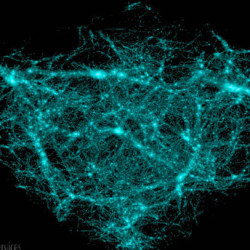
Microscopic view of a network of blue fluorescent neurons or cells interconnected by fine filaments.

What the Difference Between Dark Matter and Dark Energy?

Dark matter plus dark energy makes up over 90% of the matter in the universe, and science doesn’t understand the nature or either of them. Normal matter, the stuff we can typically see and touch, makes up only 5-10% of the matter of the universe. That means that science does not understand over 90% of what makes up the universe. In this article, I will confine my discussion to the 90% we don’t understand, dark matter/energy.

The most popular theory of dark matter is that it is a slow-moving particle. It travels up to a tenth of the speed of light. It neither emits nor scatters light. In other words, it is invisible. However, its effects are detectable, as I will explain below. Scientists call the mass associated with dark matter a “WIMP” (Weakly Interacting Massive Particle). Dark matter has a long history, that goes back to 1993. For purposes of brevity, I won’t delineate the history here. However, I want to point out that modern science believes that dark matter is the invisible glue that holds galaxies, like our Milky Way, together. It is an experimentally observed fact that the outer most stars in our galaxy are orbiting at the rate at the inner most stars. If the galaxies followed Newton’s law of gravity, the outermost stars would be thrown into space. This implies that either Newton’s laws do not apply, or that most of the mass of galaxies is invisible, hence the name dark matter. Even in the face of conflicting theories that attempt to explain the phenomena, most scientists believe dark matter is real. None of the conflicting theories (which typically attempted to modify how gravity behaves on the cosmic scale) is able to explain all the observed evidence, especially gravitational lensing (the way gravity bends light).

Currently, the scientific community believes that dark matter is real and abundant, making up as much as 90% of the mass of the universe. However, dark matter is still a mystery. For years, scientists have been working to find the WIMP particle to confirm dark matter’s existence. All efforts have been either unsuccessful or inconclusive.

The above is a brief thumbnail sketch of dark matter. Now, let’s discuss dark energy.

Mainstream science widely accepts the Big Bang as giving birth to our universe. Scientists knew from Hubble’s discovery in 1929 that the universe was expanding. Prior to 1998, scientific wisdom was that the expansion of the universe would gradually slow down, due to the force of gravity. However, in 1998, the High-z Supernova Search Team (an international cosmology collaboration) published a paper that shocked the scientific community. The paper was: Adam G. Riess et al. (Supernova Search Team) (1998). “Observational evidence from supernovae for an accelerating universe and a cosmological constant.” Astronomical J. 116 (3). They reported that the universe was doing the unthinkable. The expansion of the universe was not slowing down—in fact, it was accelerating.

Almost all scientists hold the paradigm of “cause and effect.” If it happens, something is causing it to happen. Things do not simply happen. They have a cause. Therefore, it is perfectly reasonable to believe something is countering the force of gravity, and causing the expansion to accelerate. What is it? No one knows. Science calls it “dark energy.”

That is the state of science as I write this article in April 2015. Galaxies should be flying apart, but they don’t. Science postulates that a slow-moving particle traveling up to a tenth of the speed of light that neither emits nor scatters light is responsible, and they call that particle “dark matter.” However, there is no solid theoretical or experimental evidence to support its existence. The universe’s expansion should be slowing down due to gravitational attraction, but instead it is accelerating. No one knows why. Scientists reason there must be a cause countering the pull of gravity. They name that cause “dark energy.”

Dark matter and dark energy have two things in common. They both have the word “dark” in their name and they are both a mystery to modern science.
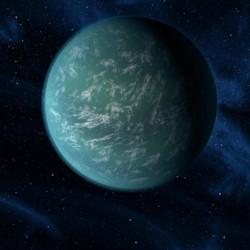


A detailed depiction of a blue-green planet with clouds, set against a starry space background.

The Search for Earth-Like Planets & Extraterrestrial Life

In 1961, Dr. Frank Drake, an American astronomer, and a founder of SETI (search for extraterrestrial intelligence), formulated an equation known as the Drake equation, to calculate the number of intelligent civilizations in our Milky Way galaxy. By multiplying together a series of terms relating to the probability of extraterrestrial life (the rate of star formation in the universe, the fraction of stars with planets, the fraction of planets with conditions suitable for life, etc.), he calculated that the existence of intelligent life on other planets is extremely likely. However, the Drake equation had several serious drawbacks. First, the equation had at least four utterly unknown terms in it, namely 1) the fraction of planets with life, 2) the odds life becomes intelligent, 3) the odds intelligent life becomes detectable, and 4) the detectable lifetime of civilizations. It suffered from a highly questionable premise, namely that advanced alien civilizations arise and die out in their own solar system. Therefore, scientists like Dr. Carl Sagan could optimistically predict over one million advanced alien civilizations in 1966, while other less-optimistic scientists predicted we were alone. All used the same equation, but with different assumptions for the unknowns. As you can imagine, instead of resolving the paradox, it fueled it. In fairness though, the Drake Equation was not proposed as a hypothesis. It was not intended to be proved or disproved. Its main purpose was to fire our imaginations to the possibility that extraterrestrial life may exist in our galaxy.

If we are not alone in the universe, it would be reasonable to assume some extraterrestrial civilizations would more advanced that ours. If intelligent life exists, imagine if they evolved one million years earlier than we did. From a cosmological perspective, one million years is a blink of an eye. Imagine what our capabilities will be a thousand years in the future, assuming humankind exists one thousand years in the future. It is entirely reasonable to assume intelligent life may have gotten an earlier start in the universe, and be scientifically more advanced. This brings us to the Fermi paradox, which poses a deceptively simple question: if the probability of advanced aliens is so high, why haven’t we detected them or been contacted by them? The paradox has to do with the high probability of existence, in this case advanced aliens, and the lack of evidence. Ancient alien theories and Roswell conspiracy theorists notwithstanding, there is no widely accepted scientific proof that aliens have visited the Earth or tried to contact us.

In 1950, employee Enrico Fermi was walking to lunch with his colleagues at Los Alamos National Laboratory. The topic of UFOs came up because of numerous sightings and reports sensationalized by the media. Although the conversation started on a light note, it soon became serious. Fermi and his colleagues began to discuss the possibility of faster-than-light travel, which from Einstein’s special theory of relativity, is impossible. However, if advanced aliens were going to visit the Earth, they would likely need to travel faster than light given the vast distances between interstellar destinations. Although Fermi’s colleagues considered faster-than-light travel a long shot, Fermi believed that science would discover a way to make objects travel faster than light within a decade. He was wrong about that, but his main point was a question. In the middle of lunch, he jumped up and asked, “Where is everybody?” His point, if the universe contains advanced extraterrestrial life, where is the evidence? Fermi began to calculate the potential existence of advanced aliens. His rough calculations indicated that the Earth would have been visited numerous times, from ancient times to the present. This became known as the Fermi Paradox, namely the probability that advanced aliens exist does not square with the lack of evidence.

However, recent discoveries of distant planets that could theoretically harbor life, though, have raised hopes that we might detect extraterrestrials, as our technology to detect them improves and  if we just keep looking. Current, scientists estimate there are about 20 billion Earth-like planets in just our galaxy, the Milky Way. When we use the term “Earth-like,” we mean the planet resembles the Earth in three crucial ways:

1)   It has to be in an orbit around a star that enables the planet to retain liquid water on one or more portions of its surface. Cosmologists call this type of orbit the “habitable zone.” Liquid water, as opposed to ice or vapor, is crucial to all life on Earth. There might be other forms of life significantly different from what we experience on Earth. However, for our definition of an Earth-like planet, we are confining ourselves to the type of life that we experience on Earth.

2)   Its surface temperature must not be too hot or too cold. If it is too hot, the water boils off. If it is too cold, the water turns to ice.

3)   Lastly, the planet must be large enough for its gravity to hold an atmosphere. Otherwise, the water will eventually evaporate into space.

In December 2011, NASA’s Kepler (i.e., the Kepler spacecraft) astronomers announced the discovery of the first Earth-like planet, now called “Kepler 22b.” It is about 2.4 times wider than the Earth, and circles a star that is similar to our sun. They estimate Kepler 22b’s average surface temperature to be about 72ºF (degrees Fahrenheit). It is 600 light years from Earth, which cosmologically speaking makes it a near neighbor. The most crucial aspect that makes the planet Earth-like is that it is in the habitable zone.

Today, NASA has confirmed 1,004 planets found, including two that are most Earth-like. The issue now is to determine how to investigate if any of the planets, especially the Earth-like planets, contain life.


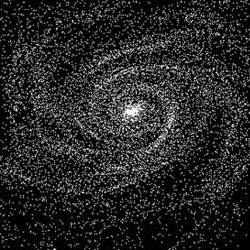
A detailed spiral galaxy with a bright core and swirling arms filled with countless stars against a dark background.

Can Galaxies Form New Stars from Nothing?

In recent years, astronomers have been puzzled by formidable mystery. Galaxies don’t appear to have enough raw material within them to form new stars at the rate they do. The Milky Way, for example,  turns about one solar mass’ worth of matter into new stars every year, despite the apparent lack of star forming raw material, such as gas and dust.. Even more perplexing, astronomers believe that galaxies expel gas and dust into outer space due to various processes within the galaxies, such as  supernova explosions of dying stars, as well as the force of radiation from bright stars. This would seem to suggest that galaxies are losing star forming material and should be unable to continue to form new starts at the rate they do.

Recently, Kate Rubin of the Max Planck Institute for Astronomy in Germany, leading a team of astronomers, used the Keck I telescope on Mauna Kea in Hawaii to observe 100 galaxies between 5 and 8 billion light-years away from Earth. They made a startling discovery. For six of the galaxies they observed, gas adrift in space was being recaptured by the galaxies and flowing back into their centers. This confirmed a long held suspicion that the gravitational attraction of galaxies would eventually recycle the gases expelled and use it to form new stars.

However, no such observation was made regarding the other 94 galaxies. Astronomers believe this is because it is difficult to detect the gas flow, which is dependent on the orientation of the galaxy. Essentially, they believe galactic recycling is occurring, but they are unable to confirm it. “This is a key piece of the puzzle and important evidence that cosmic recycling (‘galactic fountains’) could indeed solve the mystery of the missing raw matter,” according to a Max Planck Institute for Astronomy statement.

However, before we breakout the champagne, be aware that galactic recycling may not explain the entire mystery. It’s not clear that galaxies are capturing enough material to account for the amount of formation of new starts. Arguably, the most fundamental law in physics is the conservation of energy This suggests that the material to form new stars is coming from some place. If galactic recycling isn’t the total answer, we must look to other possible sources, perhaps even dark matter.

The universe is still extremely mysterious and our understanding has just scratched the surface. Galactic recycling is likely an important piece of the puzzle regarding new star formation. Like all great mysteries in science, it takes time to get and place all the puzzle pieces before the puzzle picture becomes clear.


Aerial view of a desert observatory complex with large telescopes mounted on platforms, set against mountainous terrain.

Where Is All the Lithium?

According to standard cosmology theory, Lithium, together with hydrogen and helium, is one of three elements to have been synthesized in the Big Bang. Therefore, we should see a uniform abundance of Lithium throughout the universe. However, we don’t. By experimental observation, the older stars seem to have less Lithium than they should (by a factor of 2 or 3), and some younger stars have far more. This discrepancy regarding the uniform abundance of Lithium and experimental analysis of older stars is one of the most distressing discrepancies with the Big Bang theory. In science, one significant discrepancy can dispute a theory. Therefore, this raised serious questions regarding the validity of the Big Bang theory and cast doubt on the accuracy of the experimental measurements.

In 2006, astronomers Andreas Korn of Uppsala University in Sweden and colleagues in Denmark, France and Russia made an important discovery regarding the Lithium cosmic discrepancy. Using a spectrometer on the European Southern Observatory’s Very Large Telescope in Chile, Korn and co-workers studied 18 stars in a distant globular cluster called NGC 6397, which formed roughly a few hundred million years after the Big Bang. Using their experimental data along with theoretical models of how nuclei behave in the atmospheres of stars, they put forward a new model. They hypothesized that the lithium diffuses into the interiors of stars over time, where it is burnt up at temperatures of over 2.5 million Kelvin. Their model suggested that these stars originally contained 78% more lithium than we observe today. In other words, the predicted initial amount of Lithium agrees with predictions from the Big Bang theory.

Even after Korn’s (and colleagues) discovery in 2006, some cosmologists continued to entertained a competing theory, namely that axions, hypothetical subatomic particles, may have absorbed protons and reduced the amount of Lithium created in the period just after the Big Bang. The axion particle was postulated by the Peccei–Quinn theory in 1977 to resolve the “strong CP problem” (CP standing for charge parity). In theoretical physics, quantum chromodynamics (QCD), the theory of strong interactions, predicted there could be a violation of CP symmetry in the strong interactions (the mechanism responsible for the strong nuclear force that holds the nucleus of the atom together). However, there is no experimentally known violation of the CP-symmetry in strong interactions. In effect, cosmologists forwarding the axion theory to explain the cosmological Lithium discrepancy are attempting to explain one mystery (i.e., the cosmological Lithium discrepancy) with another mystery (hypothetical axions). Although, the strong CP problem continues to remain one of the most important unsolved problems in physics, axions appear to be a far less plausible solution to the cosmological Lithium discrepancy. If we apply Occam’s razor (i.e., the simplest of competing theories is preferred to the more complex or that explanations of unknown phenomena be sought first in terms of known quantities), Korn’s (and colleagues) model triumphs.

If we accept Korn’s (and colleagues) model, one of the great cosmological mysteries is resolved and questions regarding the Big Bang model  and the experimental measurements are resolved. However, in science old paradigms seem to only die when the scientists holding them die. In my judgement, Korn and his colleagues have resolved the missing Lithium question and are potential candidates for the Nobel Prize.

Image: The Very Large Telescope is a telescope operated by the European Southern Observatory on Cerro Paranal in the Atacama Desert of northern Chile

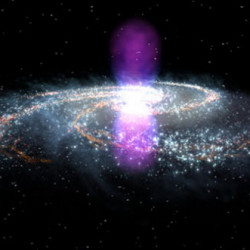
A spiral galaxy with bright purple jets emitting from its center against a star-filled cosmic background.

What Are Fermi Bubbles?

In 2010, astronomers using NASA’s Hubble Space Telescope observed giant balloon-like features emanating from the Milky Way core. The balloon-like featured are termed “Fermi Bubbles” and consist of clouds of gas towering about 30,000 light-years above and below the plane of our Milky Way Galaxy. The Fermi Bubbles are made up of super-high-energy gamma-ray and X-ray emissions, which are invisible to the naked eye.

What is causing the Fermi Bubbles is a mystery. Some scientists have hypothesized that the gamma rays might be shock waves from stars being consumed by the massive black hole at the center of the galaxy. Others suggest it may be due to a firestorm of star birth at the galactic center.

Although, we have seen similar structures emanating from the core of other galaxies, the 2010 discovery was the first time we observed the phenomena in our own galaxy, which gives us a rare close up view of the phenomena. “When you look at the centers of other galaxies, the outflows appear much smaller because the galaxies are farther away,” Dr Andrew Fox of the Space Telescope Science Institute in Baltimore, Maryland, told NASA (January 5, 2015). Dr. Fox added, “the outflowing clouds we’re seeing are only 25,000 light-years away in our galaxy. We have a front-row seat. We can study the details of these structures. We can look at how big the bubbles are and can measure how much of the sky they are covering.”

Dr Fox and his colleagues the United States, Italy and Australia used Hubble’s Cosmic Origins Spectrograph (COS) to determine:

  • The gas on the near side of the bubble is moving toward Earth and the gas on the far side is traveling away.
  • The gas is rushing from the Galactic center at roughly 3 million km per hour.
  • The gas contains silicon, carbon, and aluminum, which indicates the gas is enriched in the heavy elements produced inside stars and represents the fossil remnants of star formation.
  • The average temperature of the gaseous bubbles is thought to be approximately 18 million degrees Fahrenheit.

The next step is to calculate the mass of the material being blown out of our galaxy, which could help determine the cause of the outburst. This could provide a vital clue to the mystery of how the Fermi Bubbles formed. Most scientists suggest a powerful event took place millions of years ago, likely when the black hole at the center of our galaxy consumed an enormous amount of gas and dust (perhaps several hundreds or even thousands of times the mass of the sun). However, this is just a hypothesis. The Fermi Bubbles currently remain a mystery.